Choosing between a heavy duty trailer and a standard duty trailer may seem simple at first, but in practice, the decision affects transport safety, operating efficiency, maintenance cost, and long-term value. Many buyers focus only on initial price or basic carrying capacity, yet the real difference goes much deeper. In our experience, the right choice depends on how the trailer will actually be used, what type of load it will carry, how often it will work, and what kind of road or site conditions it must handle.
A trailer that performs well in light commercial work may not be suitable for construction equipment, industrial cargo, mining operations, or repeated long-distance hauling. At the same time, not every transport task requires a heavy duty configuration. That is why understanding the difference between heavy duty and standard duty trailers is so important. The goal is not simply to buy the strongest option, but to choose the trailer that best matches the job.
Why This Comparison Matters
The terms “heavy duty” and “standard duty” are often used broadly, but they describe two very different levels of trailer capability. A standard duty trailer is usually designed for lighter loads, more moderate usage, and less demanding environments. A heavy duty trailer, by contrast, is built for more intense service, higher stress, and greater structural demands.
This distinction matters because trailer design affects more than transport capacity. It influences how the trailer handles braking, load distribution, rough roads, frequent operation, and long-term wear. When buyers choose the wrong category, they often encounter hidden costs later, such as structural fatigue, tire wear, difficult loading, limited payload flexibility, or higher repair frequency.
What Is a Standard Duty Trailer?
A standard duty trailer is generally built for lighter or medium-duty transport work. It is often used for general cargo, small machinery, moderate commercial hauling, agricultural materials, or local transport tasks where the load and operating environment are not extremely demanding.
These trailers are usually more economical in purchase price and may be easier to maneuver for simpler transport jobs. For businesses with lighter workloads, they can be a practical solution. However, their design is usually optimized for moderate stress rather than extreme operating conditions.
Common Uses of Standard Duty Trailers
Standard duty trailers are often selected for:
local cargo delivery
light machinery transport
agricultural supplies
general building materials
moderate commercial hauling
They work well when payload demands are relatively controlled and the trailer is not exposed to heavy-duty duty cycles every day.
What Is a Heavy Duty Trailer?
A heavy duty trailer is designed for more demanding transport tasks involving higher payloads, harsher road conditions, frequent use, or more concentrated stress. These trailers are commonly used in construction, mining, logistics, industrial transport, energy projects, and equipment hauling.
Compared with standard duty models, heavy duty trailers usually feature reinforced structural design, stronger axles, more robust suspension, improved braking support, and heavier-grade materials. In our view, a heavy duty trailer is not simply a bigger trailer. It is a purpose-built transport platform designed for reliability under pressure.
Common Uses of Heavy Duty Trailers
Heavy duty trailers are often used for:
excavators, bulldozers, and construction machines
industrial equipment and steel products
containers and port transport
bulk materials in demanding operations
repeated fleet use in difficult environments
These applications place greater demands on the trailer’s frame, deck, running gear, and safety systems.
Heavy Duty vs. Standard Duty Trailers: Core Differences
The most useful way to compare these two trailer categories is by looking at the main design and performance areas.
Feature | Standard Duty Trailer | Heavy Duty Trailer |
Load Capacity | Suitable for lighter or moderate loads | Built for higher and more demanding payloads |
Frame Structure | Lighter construction | Reinforced chassis and stronger structural members |
Axle Configuration | Simpler axle setups | Heavier-rated axles and multi-axle options |
Suspension | Basic support for moderate conditions | More durable systems for rough roads and heavy loads |
Braking Performance | Suitable for lighter haulage | Designed for stronger control under larger loads |
Deck Strength | Adequate for general cargo | Better suited for concentrated and repeated heavy stress |
Durability | Good for normal use | Built for longer service under demanding operations |
Typical Applications | General transport and light commercial use | Construction, mining, industrial, logistics, and heavy hauling |
Initial Cost | Usually lower | Usually higher |
Long-Term Value | Best for lighter workloads | Better for high-demand and frequent-use operations |
This comparison shows that the difference is not based on one single factor. It is the result of multiple design choices working together.
Frame and Structural Strength
One of the most important differences between heavy duty and standard duty trailers is the frame. The frame is the structural foundation of the trailer, and it determines how well the trailer handles stress over time.
A standard duty trailer usually has a lighter structure designed for moderate loads and regular road conditions. This makes it more affordable and sometimes lighter in overall weight, which can be beneficial for certain applications. However, it may not be ideal for repeated exposure to concentrated cargo loads, rough sites, or high-frequency industrial use.
A heavy duty trailer usually has a reinforced chassis, thicker beams, stronger cross-members, and better structural support in high-stress areas. This improves the trailer’s ability to resist bending, twisting, fatigue, and premature wear.
Why Frame Strength Matters
A stronger frame does more than increase capacity. It also helps the trailer maintain stability, improve service life, and reduce the risk of structural issues when operating under demanding conditions. In daily work, this can make a significant difference in reliability.
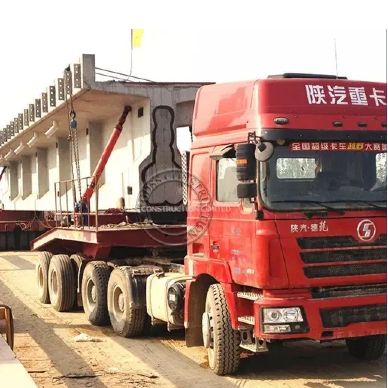
Load Capacity and Real-World Payload Handling
Payload is often the first thing buyers compare, but the real issue is not just how much weight the trailer can hold on paper. It is how well the trailer manages that weight in actual use.
Standard duty trailers are normally designed for lighter or medium loads. They can perform efficiently for many businesses, especially where freight is more uniform and operating conditions are predictable.
Heavy duty trailers are designed to manage larger weights, more concentrated pressure, and more demanding transport cycles. They are better suited for equipment, industrial cargo, or operations where the trailer must perform consistently under high load.
Concentrated Load vs. Even Load
This difference is especially important when the cargo creates concentrated pressure. For example, tracked machinery, steel coils, tanks, or industrial units may apply force to specific points of the deck rather than distributing weight evenly. A heavy duty trailer is typically better equipped to handle this kind of stress.
Axle and Suspension Differences
Axles and suspension play a major role in trailer performance. They influence weight distribution, ride stability, tire wear, and durability.
Standard duty trailers often use simpler axle arrangements that are suitable for general commercial work. Their suspension systems are designed for moderate operating conditions and lighter stress levels.
Heavy duty trailers generally use stronger axle systems, often with tandem, tri-axle, or other higher-capacity configurations. Their suspension is built to absorb more shock, support heavier weight, and maintain better stability on rough or uneven surfaces.
Performance on Rough Roads
This is one area where the gap becomes obvious. A trailer that performs acceptably on paved roads may wear quickly on construction sites, mining roads, or industrial yards if its suspension and axle systems are not built for those conditions. Heavy duty trailers usually offer a clear advantage here.
Braking and Safety Control
As trailer loads increase, braking performance becomes more critical. A standard duty trailer is typically equipped with braking support suitable for moderate hauling tasks. This is enough for lighter loads and more controlled transport conditions.
A heavy duty trailer, however, needs stronger braking capability because it is expected to stop larger mass safely and maintain control under more demanding conditions. Better braking support improves safety during loaded descents, sudden stops, and repeated industrial use.
Safety Is About More Than Capacity
Many people think a trailer is suitable as long as it can carry the weight. But safe transport also depends on stopping performance, balance, suspension response, and structural stability. In our experience, this is where heavy duty trailers often justify their higher cost.
Deck Design and Loading Practicality
Another key difference is deck strength and loading design. Standard duty trailers are often suitable for lighter general cargo and routine loading methods. They may work well for pallets, moderate building materials, and lighter equipment.
Heavy duty trailers are more likely to be engineered for concentrated wheel loads, tracked equipment, oversized cargo, or repeated loading cycles. They may also include design features better suited for ramps, lower deck height, or specialized access.
Efficiency in Daily Operations
Loading practicality matters because it affects time, labor, and safety. A trailer that technically fits the cargo but is difficult to load can reduce daily productivity. Heavy duty trailer designs often offer better support for demanding workflows.
Durability and Service Life
A standard duty trailer can provide excellent value when used within its intended range. If the loads are moderate and operating conditions are stable, it may serve reliably for many years.
However, if the work becomes more demanding than the design allows, wear tends to appear faster. This may include frame fatigue, axle strain, suspension wear, deck damage, or faster tire deterioration.
Heavy duty trailers are designed to delay these problems by using stronger materials and more robust engineering. For high-use fleets or harsh environments, that added durability can produce better long-term value.
Initial Cost vs. Lifetime Cost
Standard duty trailers usually cost less upfront, which makes them attractive for lighter operations. Heavy duty trailers usually require a larger initial investment, but they may reduce maintenance interruptions and better support demanding workloads over time.
Maintenance Considerations
Maintenance needs also differ between the two categories. Standard duty trailers may be simpler and less expensive to maintain in lighter applications. Their parts and service routines are often straightforward when they are used within normal limits.
Heavy duty trailers may involve more robust systems and higher-specification components, but they are also built with demanding service in mind. In operations where loads are consistently high, a heavy duty trailer often holds up better and avoids some of the strain-related issues that a lighter trailer might face.
Matching Maintenance to Usage
The key point is not that one trailer always costs less to maintain, but that maintenance cost depends on how well the trailer matches the job. A standard duty trailer used for heavy industrial work may become more expensive over time than a properly selected heavy duty model.
Conclusion
The difference between heavy duty vs. standard duty trailers is not just about size or price. It involves frame strength, payload handling, axle design, suspension durability, braking performance, deck support, and overall service capability. Standard duty trailers are often practical for lighter and more moderate tasks, while heavy duty trailers are better suited to demanding loads, harsh environments, and frequent use.
In our view, the best trailer is the one that matches the real job. Choosing a trailer that is too light for the work can create long-term cost and safety issues, while choosing a trailer that is far beyond operational needs may add unnecessary expense. If you are comparing trailer options and want to better understand which solution fits your transport requirements, we recommend learning more from GDSS TRAILER and exploring the configuration that best supports your workload.
FAQ
Q: What is the main difference between heavy duty and standard duty trailers?
A: The main difference is that heavy duty trailers are built for higher loads, stronger structural stress, harsher operating conditions, and more frequent use, while standard duty trailers are designed for lighter or moderate transport tasks.
Q: Are heavy duty trailers always better than standard duty trailers?
A: Not always. Heavy duty trailers are better for demanding operations, but standard duty trailers can be the more practical and cost-effective choice for lighter loads and less intensive use.
Q: How do I know if I need a heavy duty trailer?
A: You may need a heavy duty trailer if your cargo is heavy, oversized, concentrated in specific areas, transported frequently, or moved through rough road and job site conditions.
Q: Why does trailer category affect long-term cost?
A: Trailer category affects long-term cost because the wrong trailer may wear faster, need more repairs, reduce efficiency, and create safety risks if it is not matched to the real transport task.


