A trailer may look simple from the outside, but not all trailers are built for the same job. A heavy duty trailer is designed for serious transport work where cargo is larger, heavier, or more demanding than normal freight. In our view, this type of trailer is not just a larger platform. It is a specialized transport tool built to perform under higher stress and in tougher working conditions.
Heavy duty trailers are commonly used in construction, mining, agriculture, logistics, and industrial projects. They are made to carry equipment, machines, containers, bulk materials, and oversized loads that standard trailers may not handle safely or efficiently. Because of this, the design of the trailer directly affects safety, productivity, and operating cost.
Choosing the right trailer is important because transport challenges usually go beyond weight alone. Load shape, road conditions, loading methods, braking control, and long-term durability all matter. A well-designed heavy duty trailer helps businesses move cargo more safely and with fewer operational problems.
What Makes a Trailer Heavy Duty?
A heavy duty trailer is defined by its engineering rather than by size alone. It is built for repeated use under demanding conditions and is expected to handle greater payloads, stronger impact, and more difficult environments.
Compared with a standard trailer, a heavy duty trailer usually has a reinforced frame, stronger axles, a more durable deck, better suspension support, and braking systems suited for higher loads. These features allow it to perform more reliably when carrying industrial cargo or operating on mixed road conditions.
In simple terms, a heavy duty trailer is built to do hard work consistently. A large trailer without enough structural strength is not truly heavy duty. Real heavy duty performance comes from the way the entire trailer is designed to support load, stability, and safety.
Why Heavy Duty Trailers Matter
In industrial transport, the trailer is not a minor accessory. It is a key part of the transport system. If the trailer is not matched to the job, problems can appear quickly. These may include unstable towing, frame fatigue, difficult loading, faster tire wear, or higher maintenance cost.
For companies moving excavators, steel products, generators, containers, or agricultural machinery, trailer performance affects daily efficiency. A suitable heavy duty trailer helps protect the cargo, supports safer road handling, and reduces downtime caused by repairs or poor load compatibility.
We often believe the biggest value of a heavy duty trailer is not just higher capacity. It is dependable performance over time. That reliability matters when operations involve frequent transport, strict schedules, or difficult work sites.
Key Features of a Heavy Duty Trailer
Heavy duty trailers differ from ordinary trailers because several important systems are upgraded together.
Reinforced Frame
The frame is the base of the trailer. In a heavy duty model, it is built to resist bending, twisting, and long-term fatigue. Reinforced beams, stronger cross-members, and heavy-grade materials help the trailer manage concentrated and repeated loads.
This is especially important for machinery transport, where the weight may be focused in specific contact areas rather than evenly spread across the deck.
Higher Payload Capacity
A heavy duty trailer is made to support more weight safely. This does not only depend on one strong part. Payload capacity comes from the combined performance of the frame, axles, suspension, deck, and braking system.
That is why rated capacity should always be considered together with real working conditions, not as an isolated number.
Multi-Axle Design
Many heavy duty trailers use tandem, tri-axle, or more advanced axle arrangements. These help distribute weight more effectively, improve balance, and support better stability.
Axle design also affects turning, tire wear, and compliance with transport requirements. The right configuration depends on the type of cargo and the roads the trailer will use.
Durable Suspension
Suspension helps absorb shock and keep the load more stable during travel. For heavy duty use, this becomes even more important because the trailer may operate on highways, uneven roads, construction areas, or industrial sites.
Depending on the application, users may choose mechanical suspension, air suspension, or other systems that fit the work environment.
Reliable Braking System
The heavier the load, the more critical braking becomes. A heavy duty trailer needs a braking system that can control larger mass safely during stopping, descending, and emergency conditions.
Good braking support improves driver confidence and helps reduce risk during transport.
Strong Deck and Platform
The deck must match the cargo. Some loads need a flat open platform, while others require a low deck for easier machinery loading. The surface also needs enough strength to handle concentrated wheel or track pressure.
Deck design affects both loading convenience and long-term durability.
Cargo Securement Features
A heavy duty trailer should also include securement and safety details such as lashing points, ramps, lighting, reflective markings, landing gear, and other practical features. These details help improve loading safety and transport reliability.
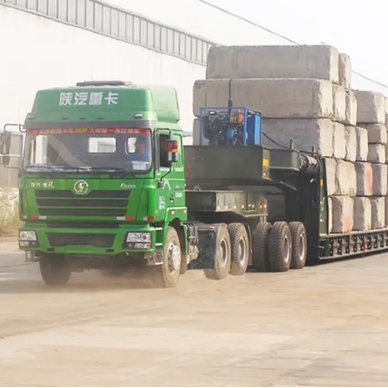
Common Types of Heavy Duty Trailers
Different industries use different trailer structures. The most suitable type depends on the cargo and transport method.
Trailer Type | Typical Use | Main Advantage |
Flatbed Trailer | Steel, pallets, building materials | Easy loading from different sides |
Low Bed Trailer | Excavators, bulldozers, machinery | Lower deck height for heavy equipment |
Skeletal Trailer | Containers, port transport | Efficient container movement |
Sidewall Trailer | Mixed cargo, bagged goods | Better cargo containment |
Tipper Trailer | Sand, gravel, aggregates | Fast unloading on site |
Modular Trailer | Oversized industrial cargo | Flexible support for special transport |
Each type serves a different purpose. That is why trailer selection should always begin with the actual cargo profile.
Main Applications of Heavy Duty Trailers
Heavy duty trailers are used in many sectors because heavy and oversized cargo exists across many industries.
Construction
Construction companies often move excavators, rollers, cranes, steel structures, and large materials. These loads are heavy, bulky, and sometimes difficult to position. Heavy duty trailers help support safer and more efficient site transport.
Mining and Quarrying
Mining environments are demanding. Roads may be rough, dusty, and uneven, while equipment is often extremely heavy. In these conditions, trailer durability becomes especially important.
Agriculture and Forestry
Large tractors, harvesters, and forestry machines often require strong transport platforms. Heavy duty trailers are useful here because they can perform in rural environments and handle equipment with high weight concentration.
Logistics and Port Operations
In logistics, uptime matters. Heavy duty trailers support the movement of containers, industrial components, and palletized freight where repeated use and stable performance are essential.
Energy and Industrial Projects
Power, oil, gas, and manufacturing projects often involve the transport of generators, transformers, tanks, and fabricated equipment. These loads may need specialized trailer structures and better load support.
What to Consider Before Buying
Before buying a heavy duty trailer, we suggest focusing on the following points.
Cargo Type
Start with the cargo itself. Consider weight, dimensions, shape, and whether the load is evenly distributed or concentrated.
Working Environment
Road and site conditions matter. Highway transport, construction zones, port operations, and mining roads all place different demands on the trailer.
Loading Method
Think about how cargo will be loaded and unloaded. Some applications need ramps, some need side loading, and others need crane access or tipping capability.
Legal Requirements
Axle loads, dimensions, braking requirements, and lighting standards may vary by region. A trailer should fit both the load and the regulatory environment.
Maintenance Support
Long-term service matters. Practical maintenance design and reliable supplier support help reduce downtime and improve ownership value.
Customization Matters
Not every business moves the same kind of load, so customization can be very important in heavy duty trailer selection.
Customization may include deck length, deck height, axle layout, suspension type, side structure, ramp system, and corrosion protection. In some cases, special reinforcement or load securement solutions are needed.
We see customization as a practical advantage rather than an extra feature. A trailer that fits the job properly often performs better and creates fewer compromises in daily use.
Conclusion
A heavy duty trailer is a transport solution built for demanding work. It is designed to carry heavy, oversized, or industrial cargo with greater strength, stability, and durability than a standard trailer. Its value comes from the full design system, including frame, axles, suspension, braking, and deck structure.
The right heavy duty trailer should match your cargo, work environment, and operating needs. When chosen carefully, it can improve transport safety, reduce downtime, and support long-term efficiency. If you are reviewing options for your next project or fleet upgrade, we recommend learning more from GDSS TRAILER to better understand which trailer configuration fits your application.
FAQ
Q: What is a heavy duty trailer?
A: A heavy duty trailer is a trailer designed to transport heavy, oversized, or industrial cargo using a reinforced frame, stronger axles, durable suspension, and reliable braking systems.
Q: What are the key features of a heavy duty trailer?
A: Key features of a heavy duty trailer include a reinforced chassis, higher payload capacity, multi-axle design, durable suspension, strong deck construction, and cargo securement features.
Q: What industries use heavy duty trailers?
A: Heavy duty trailers are widely used in construction, mining, agriculture, logistics, port transport, energy projects, and other industrial applications that involve heavy equipment or large cargo.
Q: How do I choose the right heavy duty trailer?
A: Choosing the right heavy duty trailer depends on cargo weight, cargo dimensions, road conditions, loading method, legal requirements, and long-term maintenance needs.


