The rapid scaling of onshore wind energy has pushed modern turbine blade lengths beyond 80 meters. This immense physical growth renders standard heavy haul equipment obsolete. It introduces severe logistical friction into the global supply chain. Sourcing a dedicated wind blade transport trailer is no longer a simple capacity calculation. You must precisely align advanced trailer engineering against complex route geography. You also need to navigate strict Department of Transportation (DOT) compliance rules.
We aim to define the core technical and operational criteria for evaluating specialized transport solutions. You will learn how to minimize frustrating route delays. We will explore strategies to prevent unseen structural damage to your payload. Ultimately, mastering these logistics ensures your upcoming wind project remains entirely viable.
Key Takeaways
Standard flatbeds fail against the unique flex, aerodynamic drag, and swept-path requirements of modern turbine blades.
Trailer selection (Extendable vs. Blade Lifter vs. Steerable Dolly) must be dictated by route geometry, not just blade length.
Hydraulic steering redundancy and automated leveling are critical for mitigating rollover risks and navigating strict DOT route restrictions.
Evaluating an oversized blade carrier requires calculating Total Cost of Operation (TCO), factoring in empty-return configurations and multi-use modularity.
The Engineering Challenge: Why Standard Heavy Haul Fails for Modern Blades
Turbine blades appear exceptionally robust from a distance. However, they are highly engineered composite structures. They remain relatively lightweight compared to their enormous size. This unique construction makes them surprisingly fragile at specific stress points. Standard flatbed trailers simply cannot accommodate this delicate structural balance. They force rigid support against a flexible payload. This rigidity risks creating microscopic fractures in the carbon fiber or fiberglass layers. These unseen micro-fractures compromise the operational lifespan of the entire turbine assembly.
Aerodynamic realities further complicate the transportation process. Static heavy machinery cuts through the air predictably. Wind blades actively catch the wind during transit. This aerodynamic profile creates severe lateral force. A sudden crosswind exerts massive pressure on the side of the trailer. You must utilize specialized center-of-gravity management systems to counter this force. Standard trailers lack the hydraulic leveling needed to absorb these sudden wind loads.
Finally, logistics teams face the dreaded swept-path dilemma. Navigating a standard 90-degree intersection becomes physically impossible. Mountain switchbacks present an even greater hurdle. Rigid, traditional setups demand miles of straight highway. They simply cannot turn sharply without destroying roadside infrastructure. This severe limitation establishes the baseline need for active steering capabilities. Dedicated wind turbine blade transport equipment solves this by actively manipulating the rear axles to trace the exact path of the tractor.
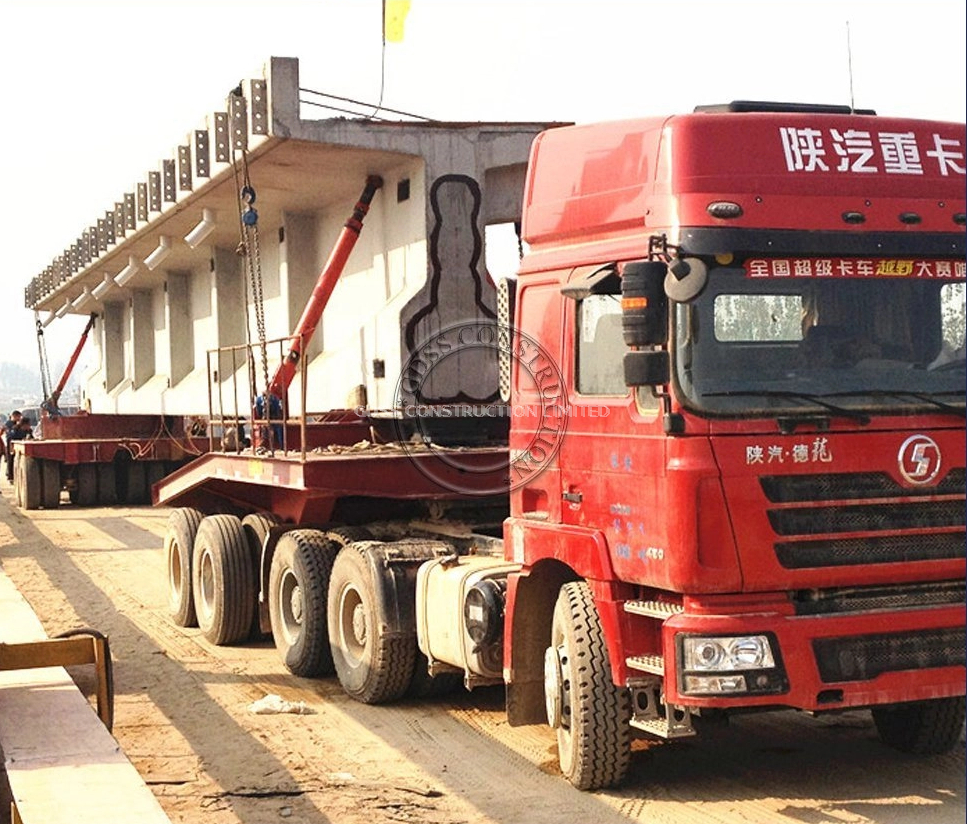
Core Solution Categories for Wind Blade Transport
Choosing the right trailer architecture requires matching your equipment to your route. You cannot rely on blade length alone as a deciding factor. We categorize the primary transport solutions below. You will learn exactly when to deploy each setup.
Telescopic / Extendable Flatbed Trailers
These trailers represent the most common entry point for blade logistics. They consist of a main beam sliding outward to accommodate different lengths. You deploy them primarily for older, shorter blade generations measuring under 60 meters. They perform exceptionally well on highway-heavy routes. They handle gentle curves efficiently. However, they present distinct limitations. An extended telescopic trailer becomes completely unmanageable on complex final-mile terrain. Tight corners and rural dirt roads quickly trap these rigid setups.
Steerable Dolly Systems (Schnabel/Trailing Dolly)
Logistics providers rely on steerable dollies for ultra-long payloads. You need this system when moving blades exceeding 80 meters. This architecture fundamentally changes the transport mechanism. It uses the blade itself as the structural bridge. The prime mover secures the root of the blade. The rear steerable axles cradle the tip. This setup eliminates the need for a massive steel spine. The implementation reality remains highly complex. You require highly coordinated co-driver operations. A secondary operator must steer the rear dolly independently via remote control to clear tight corners.
Blade Lifter Adapters (Rotor Blade Adapters)
Blade lifters serve as the ultimate problem solvers for impossible routes. You deploy them in mountainous terrain, densely forested areas, and tight urban corridors. The prime feature is a massive hydraulic arm. It physically pitches the blade upwards, reaching angles up to 60 degrees. This feature drastically reduces the required turning radius. It lifts the tip over trees, buildings, and sharp embankments. This capability avoids costly route modifications. You no longer need to remove streetlights, chop down ancient trees, or widen narrow mountain passes.
Core Trailer Architecture Comparison
Trailer Type | Ideal Route Geometry | Max Blade Length | Primary Limitation |
Telescopic Flatbed | Open highways, minimal sharp turns | Up to 60m | Poor maneuverability on final-mile dirt roads. |
Steerable Dolly | Cross-country, moderate curves | 80m+ | Requires complex dual-operator coordination. |
Blade Lifter | Mountains, dense forests, urban areas | 70m - 90m | Highly susceptible to sudden wind gusts. |
Key Evaluation Dimensions for an Oversized Blade Carrier
Procuring a high-quality oversized blade carrier demands strict technical evaluation. You must look beyond basic dimensions. Focus intensely on mechanical features dictating structural reliability and operational outcomes.
First, assess the maneuverability and axle technology. You must choose between hydraulic pendular axles and standard air ride setups. Pendular axles offer a distinct operational advantage. They provide extreme terrain compensation. A single wheel can drop into a deep rut. The system automatically adjusts hydraulic pressure to keep the trailer deck perfectly level. This action prevents the transfer of harmful torsion to the payload. Standard air ride systems cannot match this level of dynamic compensation.
Next, scrutinize the specific load securing mechanisms. The trailer must grip the blade securely without crushing it. Evaluate the root frame clamping system carefully. It must lock the heavy end down securely. Simultaneously, analyze the tip support friction thresholds. These clamps must allow for the natural flexing of the blade during transit. If you bolt the tip too tightly, the natural bounce of the road will crack the fiberglass.
Empty-return efficiency strongly influences project timelines. A specialized renewable energy trailer must retract or stack efficiently once the blade reaches the site. You must evaluate the exact deployment-to-retraction time. Lengthy, unretracted empty transit trips heavily impact secondary permitting requirements. A fast-retracting trailer minimizes escort needs on the return journey.
Consider these essential evaluation criteria before finalizing your equipment selection:
Hydraulic redundancy: Ensure backup systems exist for rear steering modules.
Friction padding: Verify the composition of the tip saddle materials.
Remote range: Test the communication range for the secondary steering operator.
Ground clearance: Measure the maximum hydraulic lift available on the main deck.
Navigating DOT Compliance, Permitting, and Route Surveys
Regulatory compliance dictates the rhythm of heavy haul logistics. Navigating complex legal frameworks requires deep preparation. You must integrate compliance-aware thinking directly into your early planning stages.
State-by-state variations present massive hurdles for interstate transit. You will encounter severe fragmentation in DOT regulations. One state may allow a rear overhang of 30 feet. The neighboring state might restrict it strictly to 20 feet. Furthermore, escort vehicle requirements shift constantly. You must monitor pilot car rules closely. Some jurisdictions demand private pilot cars. Others enforce strict police escort thresholds based entirely on trailer dimensions. You must map these varying rules before dispatching the truck.
Pre-transport route analysis mitigates unexpected roadblocks. You should never rely on standard GPS tools for these payloads. Emphasize feeding exact trailer specifications into 3D swept-path analysis software. You must complete this task during the early project bidding phase. This software simulates every turn, overpass, and intersection. It proves mathematically that your trailer can clear the route. DOT officials often require these exact simulation reports to secure your final transport permits.
Finally, calculate weight distribution constraints meticulously. People assume weight is not an issue because fiberglass blades are relatively light. However, the combined tare weight of massive multi-axle trailers changes the equation. A fully loaded steerable dolly setup can trigger strict bridge weight restrictions. You must utilize flexible axle spacing. Adjusting the distance between axle groups helps distribute the load legally across older bridge spans.
Fleet Integration and Equipment Procurement Logic
Building a robust fleet requires strategic foresight. You cannot afford to purchase single-use assets in modern heavy logistics. Fleet managers must evaluate how new trailers fit into broader operational demands.
Modularity stands as a primary purchasing factor. You must ask if the prime mover and specific axle modules serve other purposes. Can you easily repurpose the base platform for wind tower transport? Can you configure the deck to haul heavy nacelles when not moving blades? True modularity allows you to keep the equipment working year-round. You avoid letting expensive steel sit idle in a yard between blade contracts.
Maintenance overhead directly impacts your operational readiness. Specialized trailers contain highly complex auxiliary power units (APUs). You require these diesel-powered APUs to run the hydraulic blade lifters. They also power remote-steering systems on trailing dollies. You must factor in the rigorous maintenance schedule for these independent engines. Hydraulic line inspections become a daily necessity. Replacing custom pendular axle parts requires dedicated vendor support.
Base your final shortlisting logic on a clear matrix of operational factors. First, define the maximum blade length capacity you anticipate hauling over the next five years. Second, analyze the specific regional geography of upcoming wind farm deployments. Third, evaluate the trailer manufacturer’s local part-support network. You cannot afford to wait weeks for a replacement hydraulic valve shipped from overseas.
Audit your current fleet's axle configurations.
Forecast the blade lengths of your next three major contracts.
Cross-reference trailer specifications against expected geographic bottlenecks.
Confirm rapid access to proprietary replacement parts.
Conclusion
Sourcing the correct trailer serves as a critical risk-mitigation strategy. You must protect million-dollar assets from the factory to the installation site. Deploying the appropriate axle technology and steering architecture prevents costly structural damage. It also eliminates frustrating project bottlenecks caused by route failures.
Action-oriented next steps include:
Audit your upcoming project pipeline's specific route constraints immediately.
Never commit to a specialized trailer architecture without confirming final-mile geography.
Engage directly with manufacturers to run CAD-based turning simulations prior to finalizing a purchase.
Train your secondary operators thoroughly on remote rear-steering protocols.
FAQ
Q: What is the maximum blade length a standard extendable trailer can legally transport?
A: Standard telescopic trailers generally reach their operational and legal limits around 50 to 60 meters. Beyond this length, route friction becomes unmanageable. Negotiating standard highway curves becomes impossible without destroying infrastructure. Once blades exceed 60 meters, DOT officials and route geometries dictate the mandatory use of rear-steering dollies or hydraulic lifters.
Q: How does a blade lifter trailer handle high crosswinds?
A: Blade lifters face strict operational limits in high winds. Raising the blade to a 60-degree angle massively increases the exposed surface area. This creates a dangerous sail effect. To manage this, lifters utilize integrated wind-speed sensors. Operators follow strict thresholds, immediately lowering the blade flat if wind gusts exceed safe manufacturer specifications.
Q: Can wind blade transport trailers be shortened for the return trip?
A: Yes. Telescopic flatbeds feature internal locking pins allowing them to retract entirely. They shrink back to standard legal flatbed lengths. This retraction eliminates the need for specialized oversized return permits. It also completely removes the costly requirement of paying pilot cars and police escorts for the empty journey home.
Q: Do these trailers require separate operators for the rear axles?
A: Yes, advanced setups require a highly trained secondary operator. Steerable dollies and blade lifters rely on independent rear manipulation. The co-driver walks alongside or follows closely in an escort vehicle. They use a wireless remote control to independently steer the rear wheels or adjust the blade pitch during complex final-mile maneuvers.


