Transporting raw milk requires balancing maximum payload efficiency against zero-tolerance sanitary compliance. Fleet managers face immense pressure here. Raw milk spoils rapidly during transit. A poorly engineered tanker risks devastating bacterial contamination. Single load rejections destroy route profitability instantly. We must treat transport assets as mobile extensions of processing plants.
In this guide, you will learn how a properly specified milk tanker aluminum tank reduces gross vehicle weight. It dramatically increases your per-trip profitability. We explore stringent food-grade regulatory frameworks protecting these sensitive loads. You will discover crucial details about thermal dynamics and verifiable cleanability. We also detail advanced engineering mandates guaranteeing load safety.
You will leave this article equipped to make smarter procurement decisions. These insights protect your product, your compliance status, and your operational margins.
Key Takeaways
Payload vs. Compliance: Aluminum outer construction significantly reduces tare weight, while stainless-steel inner vessels ensure compliance with raw milk sanitary regulations.
Thermal Integrity: High-density insulation must prevent temperature fluctuations exceeding 1°C to 2°C over a 24-hour transit to avoid bacterial growth and load rejection.
Cleanability: Smooth, polished internal welds (minimum 32 Ra finish) and strategically engineered CIP spray systems are non-negotiable for eliminating bacterial harborage.
Regulatory Alignment: Procurement criteria must align with regional sanitary guidelines (such as state-level ATCP/IAC mandates or international DTAS standards) to ensure fleet compliance.
The Payload vs. Spoilage Challenge in Dairy Transport
The Margin Dilemma
Fleet operators must maximize volume per trip. They cannot risk catastrophic load rejections due to temperature abuse. Bacterial contamination remains a constant threat. Empty space inside a tank represents lost revenue. However, pushing weight limits using incorrect materials creates legal and sanitary hazards. You need equipment capable of hauling more product legally. Simultaneously, the asset must guarantee absolute food safety.
Success Criteria for a Dairy Transport Tanker
To navigate this margin dilemma, procurement teams must evaluate assets against strict operational benchmarks. A successful dairy transport vehicle must deliver the following outcomes consistently:
Sub-degree temperature retention: The system must hold milk cold over long-haul routes.
100% verifiable sanitation: Every surface must pass stringent testing after every wash cycle.
Maximum payload capacity: The unit must carry maximum volume within legal axle weight limits.
Structural durability: The vessel must withstand dynamic fluid shifts across thousands of miles.
Cost of Failure
A rejected milk load carries severe financial penalties. The direct spoilage costs hit your bottom line immediately. Processing delays follow, disrupting downstream manufacturing schedules. Furthermore, receiving a contaminated load at a dairy facility creates massive cross-contamination risks. Facilities may require complete sanitization shutdowns if spoiled milk enters their silos. These cascading failures severely damage fleet reputations and incur hefty regulatory fines.
Evaluating Milk Tanker Aluminum Tank Construction for Food-Grade Safety
Industry standards mandate a dual-metal approach for bulk dairy transit. Manufacturers use an aluminum outer jacket to reduce tare weight significantly. This outer barrel protects the insulation while remaining exceptionally light. Inside, builders pair it with a 304 or 316L stainless steel inner vessel. This stainless core handles the rigorous demands of food grade liquid transport. You gain the payload advantages of lightweight aluminum alongside the sanitary security of premium stainless steel.
Inner Vessel Geometry
Shape dictates cleanability and drainage speed. Elliptical or cylindrical designs are mandatory in dairy logistics. They distribute fluid pressure evenly and prevent pooling. Sloped bottoms ensure rapid and complete drainage. Any residual milk left in a flat-bottom tank becomes a breeding ground for bacteria. Engineering a precise slope toward the discharge valve eliminates standing liquid entirely.
Weld Quality and Surface Finish
Internal welds require obsessive attention to detail. Manufacturers must grind and polish all internal seams flat. Regulatory frameworks require a minimum 32 Ra (Roughness Average) finish. This creates a continuous, crevice-free internal surface. Smooth finishes meet rigid 3-A Sanitary Standards seamlessly. They prevent microscopic biofilms from anchoring to the metal. If bacteria cannot stick to the wall, CIP systems can flush them away easily.
Baffle Design Consideration
Surge baffles stabilize liquid during transit. They prevent dangerous weight shifts when a driver brakes. However, baffles often create blind spots during cleaning cycles. Engineers must design internal baffles precisely. They typically use dished or highly polished flow-through designs. This stabilizes the payload without blocking CIP spray coverage. Poorly designed baffles harbor residues and fail ATP swab tests constantly.
|
|
|
Table 1: Material Roles in Dairy Tanker Construction |
Component |
Primary Material |
Core Function |
Sanitary Impact |
Outer Jacket |
Aluminum |
Tare weight reduction, weather protection. |
None directly. Protects internal insulation integrity. |
Inner Vessel |
304/316L Stainless Steel |
Product containment, corrosion resistance. |
Critical. Direct contact requires 32 Ra polish. |
Surge Baffles |
Polished Stainless Steel |
Fluid dynamic stability, anti-slosh. |
High. Must not obstruct CIP spray trajectories. |
Discharge Valves |
Sanitary Stainless Steel |
Controlled unloading, sealing. |
Critical. Must dismantle easily for manual swabbing. |
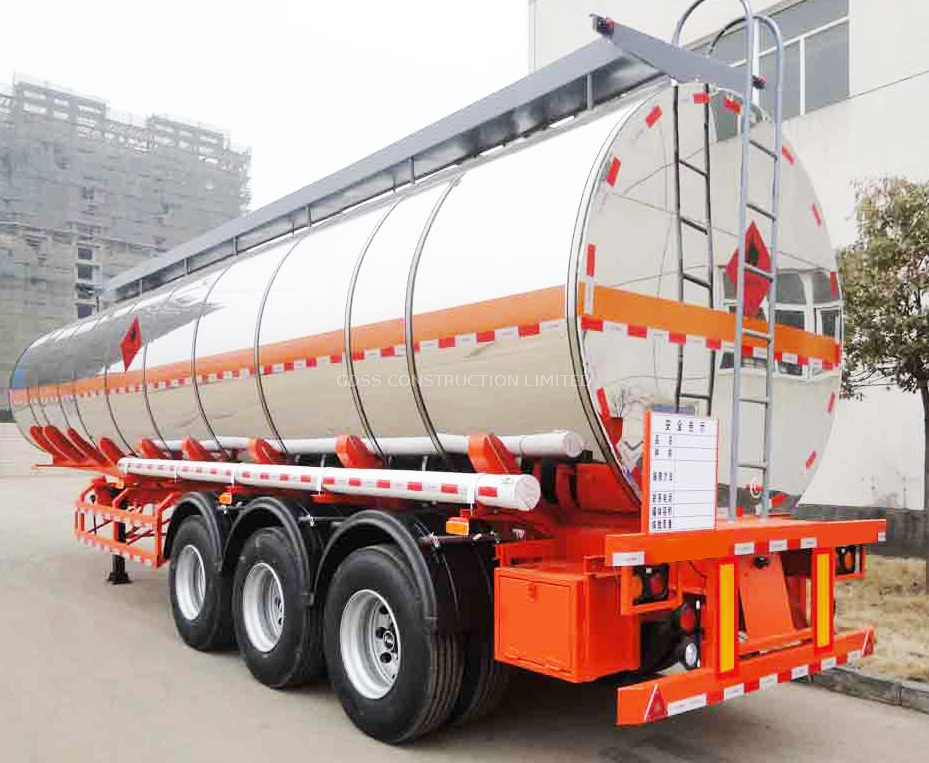
Thermal Dynamics: Temperature Control Criteria for a Sanitary Milk Tanker
Insulation Architecture
Temperature control depends entirely on insulation quality. Manufacturers inject high-density polyurethane foam between the inner tank and the aluminum shell. Some builders utilize spun glass layers instead. Polyurethane foam generally provides superior thermal resistance per inch. This dense barrier blocks ambient heat from reaching the chilled milk. Consistent application matters deeply. Voids in the foam layer create hot spots inside the tank.
Thermal Bridging Risks
Engineers must identify and eliminate thermal bridges. A thermal bridge occurs when metal parts connect the inner vessel directly to the outer jacket. Heat travels rapidly across these metal-to-metal contact points. This compromises temperature retention severely. A premium sanitary milk tanker utilizes composite isolation pads. These pads decouple the steel tank from the aluminum frame. Decoupling stops heat transfer dead in its tracks.
Regulatory guidelines set strict performance expectations. Operators must maintain raw milk at or below 4°C (39°F). Quality tankers ensure minimal thermal gain even during extreme summer temperatures. A well-insulated vessel loses no more than 1°C over a 24-hour transit period. Exceeding this baseline invites rapid bacterial multiplication. Processors routinely reject loads arriving above 7°C (45°F).
Venting and Pressure Relief
Sealed tanks face extreme pressure changes. CIP wash cycles introduce boiling water and cold rinses rapidly. Rapid cooling creates massive internal vacuums. Without proper venting, the steel vessel will implode instantly. Sanitary vents protect the tank from implosion and explosion. They balance pressure safely. Furthermore, they utilize micro-mesh filters. These filters block environmental dust and airborne pathogens from contaminating the payload.
Best Practices & Common Mistakes
Best Practice: Always schedule annual thermal imaging audits on your fleet. Infrared cameras easily detect hidden insulation degradation before it causes a load rejection.
Common Mistake: Ignoring vent maintenance. A clogged sanitary vent restricts airflow during unloading, increasing unloading times and raising the risk of structural implosion during the next wash cycle.
Clean-in-Place (CIP) Architecture and Cleanability Standards
CIP System Integration
A flawless internal wash is critical. We evaluate CIP systems based on spray ball placement and coverage angles. Spray balls must guarantee 100% surface saturation. They rely on standard flow rates and pressure metrics at the wash bay. Engineers calculate fluid trajectories meticulously. Even a small shadow cast by a baffle causes wash failure. High-impact turbulent flow strips away fat deposits and protein films reliably.
Valve and Piping Sanitary Design
Discharge points represent high-risk contamination zones. Procurement officers must assess butterfly valves versus seat valves carefully. Butterfly valves often prove easier to dismantle. Rear-cabinet piping demands extreme simplicity. Wash bay operators must dismantle these components daily for manual inspection. Threaded fittings are strictly forbidden. You must use sanitary clamp connections. They allow rapid takedown and meticulous manual swabbing.
Verifiable Cleanability
Modern fleets rely on data to prove sanitation. Design choices directly support mandatory ATP (Adenosine Triphosphate) swab testing. ATP swabs detect residual organic matter instantly. Regulatory wash-tag compliance depends on passing these swabs. A reliable dairy transport tanker meets PMO requirements in the US or DTAS standards in the UK effortlessly. Compliance prevents operational delays and regulatory audits.
Pre-rinse Verification: Ensuring initial bursts remove 90% of loose organic soils before chemical application.
Chemical Saturation: Confirming caustic solutions reach every upper dome crevice via optimal spray ball pressure.
Drainage Speed: Timing the sloped drainage to ensure wash water exits without pooling around the rear valves.
ATP Swab Targeting: Testing high-risk zones, such as vent housings and valve gaskets, to verify microscopic cleanliness.
Evidence-Oriented Claim
"A tank is only as sanitary as its most difficult-to-clean crevice. Procurement must demand fluid-dynamics modeling or verified CIP coverage reports from the manufacturer."
Implementation Realities: Maintenance and Fleet Rollout of an Aluminum Tank Trailer
Lifecycle Maintenance
Operating these assets requires split maintenance strategies. You must protect the aluminum outer shell against road salts and winter chemicals. Regular exterior washing prevents aggressive galvanic corrosion. Conversely, the inner vessel demands chemical passivation schedules. Passivation restores the protective chromium oxide layer on the stainless steel. A well-maintained aluminum tank trailer outlasts cheaper alternatives by decades when cared for properly.
Cabinet and Pump Security
Rear and side enclosures house delicate sanitary components. These cabinets must remain entirely dust-proof and watertight. Road grime destroying a discharge valve is a costly failure. Furthermore, fleets operating in freezing climates need heated cabinets. Heating prevents residual moisture in the pumps from freezing and cracking the steel housings. Secure cabinets protect your most vulnerable product-contact points during transit.
Shortlisting Logic for Procurement
Procurement teams should adopt a rigorous shortlisting framework. Do not base decisions on upfront pricing alone. Follow these strategic steps to evaluate potential assets properly:
Request concrete proof of compliance with local dairy handling regulations. You need 3-A certifications, FDA alignments, and state-specific codes.
Compare the tare weight savings directly against the required insulation thickness. Ensure weight reduction does not compromise thermal retention.
Validate the manufacturer’s warranty specifically regarding internal welds. Demand guarantees covering structural integrity under dynamic fluid loads.
Review independent CIP coverage maps. Ensure the manufacturer has mapped the spray ball trajectories mathematically.
|
|
|
Procurement Evaluation Chart: Steel Outer vs. Aluminum Outer Jackets |
Evaluation Metric |
Standard Full-Stainless Tanker |
Aluminum Jacket Tanker |
Operational Impact |
Average Tare Weight |
Heavier (Approx. base line) |
Lighter (Up to 15% reduction) |
Allows higher milk volume per trip. |
Payload Capacity |
Restricted by road limits |
Maximized legally |
Directly increases route profit margins. |
Exterior Maintenance |
Low (Highly corrosion resistant) |
Moderate (Requires road-salt washing) |
Affects long-term visual fleet aesthetics. |
Internal Sanitation |
Excellent (304/316L SS) |
Excellent (304/316L SS) |
Identical food-safety profiles. |
Conclusion
Selecting the right milk tanker requires looking far past raw volume metrics. The decision hinges entirely on the engineering of the inner sanitary vessel. It depends on the efficiency of the thermal barrier. Finally, it relies on the weight-saving benefits of the aluminum outer shell. Balancing these three pillars guarantees safe, profitable operations.
We advise procurement teams to take immediate action before finalizing any fleet additions. Request a detailed technical specification sheet from your short-listed manufacturers. Focus heavily on internal Ra finish metrics and structural warranty terms. Demand CIP coverage maps and certified tare-weight documents. Securing this data before initiating a pilot rollout prevents costly compliance failures down the road.
Always verify the Ra polish rating of internal stainless steel welds.
Ensure thermal insulation bridges are eliminated to maintain sub-degree temperature control.
Prioritize verifiable CIP coverage via manufacturer fluid-dynamics reporting.
Leverage aluminum outer jackets to maximize legal payload weights efficiently.
FAQ
Q: Can raw milk be transported directly in an aluminum tank?
A: No. Raw milk is sensitive and mildly corrosive. A standard "milk tanker aluminum tank" utilizes an aluminum outer jacket for weight savings, while the actual product-contact surface is high-grade stainless steel (304/316L) to meet food-grade sanitary standards.
Q: How long can a sanitary milk tanker maintain safe temperatures?
A: High-quality food grade liquid transport tankers with properly engineered polyurethane insulation are designed to lose no more than 1°C to 2°C over a 24-hour period, even in high ambient temperatures.
Q: What makes a dairy transport tanker CIP-compliant?
A: CIP compliance requires continuous, highly polished internal surfaces (no 90-degree corners or crevices), engineered slope for complete drainage, and calibrated spray balls that ensure turbulent chemical and water flow over 100% of the interior surface.
Q: Does an aluminum tank trailer reduce overall fleet costs?
A: Yes. The lighter tare weight of the aluminum outer jacket allows for hundreds of additional gallons of milk per trip while remaining within legal road weight limits, directly improving the route's profit margin.


