Transporting 80 tons of highly abrasive, dense materials requires exact alignment between payload capacity, structural integrity, and local weight compliance. Fleet managers face a difficult balancing act every single day. Over-specifying a vehicle adds unnecessary tare weight. It directly inflates your daily fuel consumption. Conversely, under-specifying your fleet leads to disastrous outcomes. You risk cracked frames, blown hydraulic cylinders, or catastrophic rollovers on uneven job sites. We must address these physical and mechanical realities head-on.
Our objective is to equip fleet managers and procurement teams with a clear evaluation framework. You will learn how to spec a robust vehicle engineered for maximum operational efficiency and job site safety. We break down the physics of load distribution and volume. We explore critical hardware selections, from steel grades to hydraulic lift systems. By following this guide, you can confidently navigate equipment procurement. You will build a fleet capable of surviving the harshest quarry environments.
Key Takeaways
Density dictates design: Cubic volume does not equal payload tonnage; sand and stone require specific volumetric calculations to avoid exceeding Gross Vehicle Weight Ratings (GVWR).
Material selection is critical: U-shaped beds forged from Q345B or T700 high-strength steel offer the best balance of abrasion resistance and tare weight reduction.
Stability over volume: Framed three axle dump configurations drastically reduce the rollover risks commonly associated with long, frameless trailers during the dumping cycle.
The Physics of 80 Ton Payloads: Volume, Density, and Compliance
Cubic yards measure spatial volume. Tonnage measures actual physical weight. You cannot swap these terms interchangeably. Transporting dense aggregates forces you to confront mathematical realities. An 80 ton dump trailer must be sized based on specific material densities, not just physical box dimensions. Sand and stone are incredibly heavy. You will reach your maximum weight limit long before you fill a massive trailer box.
Consider the varying densities of common job site materials. Wet sand weighs significantly more than dry topsoil. Crushed stone places intense concentrated pressure on your chassis. You must calculate volume precisely to avoid overloading.
Material Type | Approximate Density (Tons per Cubic Yard) | Volume Required for 80 Tons (Cubic Yards) |
Dry Sand | 1.2 | 66.6 |
Wet Sand | 1.4 | 57.1 |
Crushed Stone (Gravel) | 1.35 | 59.2 |
Solid Limestone | 2.0 | 40.0 |
Tare weight deeply impacts your payload profitability. We observe an inverse relationship between trailer deadweight and fuel efficiency. Every pound of structural deadweight steals a pound from your paying cargo. Manufacturers use high-strength alloys to trim excess bulk. A mere 1-ton reduction in tare weight yields measurable fuel savings per 100 kilometers. These savings directly improve your daily operational margins.
Regulatory constraints dictate your final design choices. Regional Department of Transportation (DOT) laws enforce strict bridge formulas. They limit the weight allowed on any single axle group. You must match your axle counts and axle spacing to local bridge laws. Spreading a heavy payload across multiple axles ensures legal highway compliance. It prevents costly weigh-station fines. It also protects municipal infrastructure from rapid degradation.
Why the Three Axle Dump is the Industry Standard for Heavy Aggregates
Weight distribution remains the primary engineering challenge for heavy transport. Concentrated loads like large boulders inflict severe stress on a chassis. The three axle dump configuration optimizes load displacement perfectly. It spreads the intense gravitational force evenly across the frame. This structural harmony prevents localized stress fractures. You extend the operational lifespan of your equipment significantly.
We constantly weigh maneuverability against stability. A tandem 10-wheeler offers tight turning radiuses. However, it severely limits your legal payload capacity. A quad-axle setup carries massive weight but struggles in confined quarry spaces. The three-axle setup provides a highly necessary middle ground. It corners effectively in tight construction zones. It also remains firmly planted during heavy highway transit.
Fleet operations demand extreme versatility. You cannot afford highly specialized equipment sitting idle. This specific axle configuration allows for flexible daily deployment. It easily masters dual-purpose hauling operations.
Heavy Inbound Deliveries: You can haul massive payloads of crushed stone, gravel, and paving sand directly to active project sites.
Site-Clearing Outbound Loads: You can swiftly remove heavy demolition debris, compacted clay, and broken concrete slabs on your return trip.
Seasonal Adaptability: You can transition from summer construction aggregates to winter salt and stockpiling without changing your primary fleet setup.
This flexibility keeps your trucks moving. It maximizes your daily dispatch schedules. A versatile fleet adapts to market demands instantly.
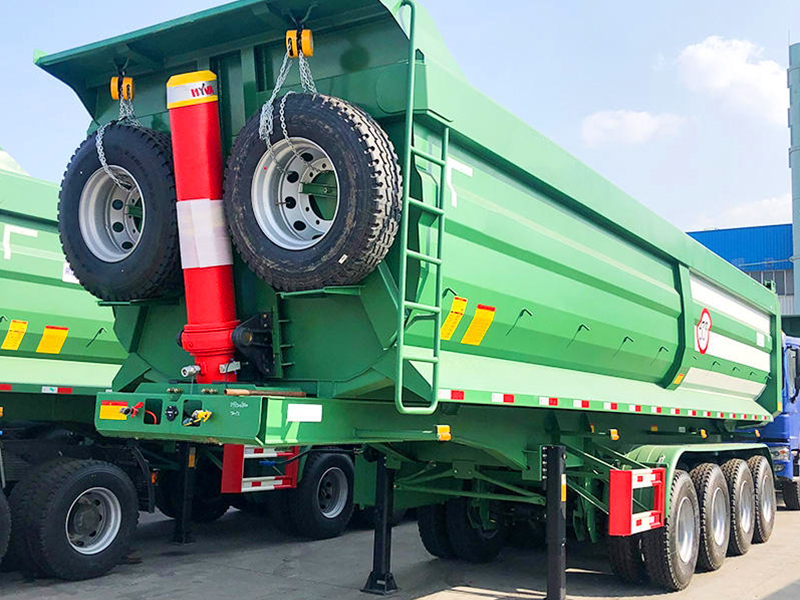
Specifying the Sand Stone Transport Trailer: Hardware Evaluation Framework
Selecting the right hardware separates a durable workhorse from a maintenance nightmare. When specifying your sand stone transport trailer, you must evaluate steel grades rigorously. High-tensile manganese plate steel is absolutely vital. Q345B steel provides excellent baseline durability. T700 steel upgrades your strength while reducing thickness. It lowers your overall tare weight. We strongly advise against aluminum for rough stone applications. Aluminum offers fantastic weight advantages. However, it proves economically unviable here. Rough boulders easily dent, gouge, and tear aluminum side walls. You will face constant welding repairs.
Box geometry influences your daily cycle times heavily. A rectangular box features deep 90-degree corner pockets. Damp sand easily packs into these corners. It sticks stubbornly during the dumping cycle. This leftover material reduces your next payload capacity. It also forces drivers to manually clean the bed. A U-shaped tipper trailer solves this problem completely. The smooth, curved interior eliminates hidden corners. Damp materials slide out smoothly and instantly. This geometry also lowers the overall center of gravity naturally.
| | Comparison Chart: Box Geometry Designs |
Feature | U-Shaped Bed | Rectangular Bed |
Corner Pockets | None. Smooth transitions. | Deep 90-degree angles. |
Material Retention | Minimal to zero stickiness. | High retention of wet sand/clay. |
Center of Gravity | Lower, improving road stability. | Higher, increasing rollover risk. |
Cycle Time Impact | Accelerates unloading speed. | Requires manual cleaning delays. |
Hydraulic systems dictate your operational safety during the lift. You must specify reputable hydraulic cylinders like Hyva. Cheap cylinders fail under extreme pressure. Front-mounted telescopic lifts represent the industry standard for long beds. They offer excellent leverage. Alternatively, scissor lifts or dual-piston setups provide lateral stability for shorter beds. Fluid pressure regulation remains critical. Proper regulation minimizes violent vibrations when the cylinder reaches maximum extension.
Suspension choices impact ride quality and structural fatigue. Mechanical leaf-spring suspensions dominate harsh off-road environments. They are incredibly durable. Mechanics can repair them easily on remote job sites. Air ride suspensions offer a different advantage. They level the load perfectly. They also absorb structural road shock when the trailer runs empty. You must weigh your typical route conditions before choosing.
Mitigating Job-Site Risks: Rollovers and Maintenance
Unloading 80 tons of shifting material introduces severe physical dangers. The rollover threat haunts every operator. As the hydraulic cylinder extends, the center of gravity shifts dangerously high. A sudden crosswind can easily push the extended box over. Uneven ground exacerbates this instability entirely. Frameless models suffer greatly in these scenarios. They lack structural rigidity during the lift. Conversely, a framed heavy duty trailer keeps all wheels firmly planted. The rigid frame anchors the lift cycle. It resists lateral forces aggressively.
Site preparation establishes your primary defense line. You must enforce strict operational rules for your drivers. Even the most perfectly engineered system demands a highly level surface. Hydraulic extension amplifies minor ground slopes. A three-degree lateral slope can trigger a catastrophic tip-over. Drivers must inspect the dumping zone physically before engaging the PTO.
Preventative maintenance prevents small issues from becoming lethal failures. Heavy-duty applications require non-negotiable inspection routines. A standard dump trailer will literally shake itself apart without proper care.
Inspect hydraulic lines weekly: Look closely for micro-leaks or braided hose abrasions. High-pressure blowouts cause immediate load drops.
Verify auto-adjusting brakes: Sand and gravel dust easily contaminate brake drums. Confirm your slack adjusters function properly.
Lubricate all hinge pins: The rear pivot pins bear the entire 80-ton load during the final dumping phase. Grease them frequently to prevent metal shearing.
Check suspension hangers: Look for hairline cracks around the spring hangers. Heavy impacts fracture these welds over time.
Procurement Logic: Evaluating Vendors and Production Timelines
Selecting a reliable vendor requires thorough vetting. You should look beyond generic, off-the-shelf builds. A specialized dump semi trailer demands custom engineering. Advise your procurement teams to seek Original Equipment Manufacturers (OEMs) offering adaptable specifications. You might need thicker side walls for jagged granite. You might need an integrated lifting front axle to save toll costs. Rigid manufacturers cannot accommodate these crucial operational tweaks. Customization ensures your equipment matches your daily reality.
Evaluating production and delivery timelines sets realistic business expectations. Custom heavy-duty equipment does not ship overnight. Supply chain realities dictate steady pacing. Standard lead times typically range from 30 to 50 days post-deposit. You must factor this window into your fleet expansion plans. Rushing a build process often results in compromised weld integrity. Demand detailed production milestones from your chosen vendor.
Component standardization keeps your fleet operational. Proprietary parts create severe maintenance bottlenecks. If a rare suspension bracket breaks, your truck sits idle for weeks. You must insist on standardized, globally recognized components. Specify standard 13-ton axles. Ensure your brake valves and lighting harnesses use standard commercial sizing. This strategy guarantees immediate parts availability anywhere in the world. It keeps your wheels turning and your schedules intact.
Conclusion
A successful 80-ton aggregate transport strategy relies on precise engineering. You must perfectly match your trailer geometry to the task at hand. Selecting high-tensile steel ensures long-term survival against abrasive stone. Specifying reliable hydraulic systems protects your drivers during critical unloading phases. The three-axle configuration proves its worth daily. It expertly balances heavy payload displacement with job site maneuverability.
Your next steps require careful internal auditing. Do not submit an RFQ blindly. Audit your typical route weight regulations thoroughly. Assess the ground levelness of your most frequent job sites. Determine exactly what materials you haul most often. Armed with this operational data, you can confidently specify a customized transport solution. You will build a fleet ready to conquer the heaviest demands of the aggregate industry.
FAQ
Q: How do I calculate the correct cubic capacity for an 80 ton sand load?
A: You must divide the target payload (80 tons) by the specific material density. Wet sand averages 1.4 tons per cubic yard. This requires roughly 57 cubic yards of space. Dry sand averages 1.2 tons, requiring nearly 67 cubic yards. Never use a single volumetric standard for different aggregates.
Q: Are frameless dump trailers safe for transporting heavy stone?
A: Frameless models introduce high instability risks. They become highly susceptible to crosswinds and uneven ground during the dumping cycle. For heavy, shifting stone on rugged quarry ground, framed models offer far superior rigidity and rollover prevention.
Q: What is the advantage of a U-shaped tipper trailer?
A: A U-shaped interior eliminates 90-degree corner pockets. This smooth geometry prevents damp sand and sticky clay from hanging up in the corners. It accelerates your unload times significantly. It also lowers the center of gravity, enhancing highway stability.
Q: Can a three-axle dump trailer be customized with a lifting front axle?
A: Yes. Many OEMs offer a lifting front axle customization. Raising this axle when the vehicle runs empty drastically reduces premature tire wear. It also lowers toll fees on specific commercial routes, enhancing overall fleet efficiency.


