Choosing a heavy duty trailer may seem simple at first, and many buyers start by focusing only on payload. But in our experience, carrying capacity is just one part of the decision. The right heavy duty trailer should also match load size, weight distribution, route conditions, loading method, usage frequency, and long-term maintenance needs. A trailer that looks suitable on paper may still create problems in daily use if it is difficult to load, poorly balanced, or not durable enough for rough working conditions.
We believe a heavy duty trailer should be chosen as part of a complete transport system rather than as a standalone product. The load, towing vehicle, trailer structure, suspension, axle setup, braking system, and operating route all need to work together. When these factors are properly matched, transport becomes safer, more efficient, and more reliable over time.
Start with the Load, Not the Trailer
The best way to choose a trailer is to start with the load itself. Before comparing trailer models, we recommend clearly defining what needs to be transported. Total load weight is the first factor, and this should include not only the cargo, but also any accessories, supports, packaging, or extra equipment involved in transport. Buyers sometimes look only at the listed weight of the machine or cargo unit and overlook the real operating load, which can result in choosing a trailer that is not strong enough.
Cargo dimensions, weight distribution, and load stability are just as important. Length, width, and height affect deck size, loading angle, route limits, and overall balance. Some loads are evenly distributed, while others place concentrated pressure on specific areas of the deck, which requires stronger structural support. In addition, oversized, irregular, or high-center-of-gravity cargo may need a different trailer design from standard freight, because stability during turning, braking, and road vibration becomes much more critical.
Understand the Main Trailer Types
Different trailer structures are developed for different tasks. Choosing the wrong type can create daily inefficiency even if the trailer technically has enough capacity.
Flatbed Trailer
A flatbed trailer is often chosen for general heavy cargo because it offers open access from the sides, rear, and sometimes above. It works well for steel products, building materials, large pallets, and some machinery that can be loaded by forklift or crane. We usually see flatbeds preferred when flexibility matters more than specialized low-height loading.
Low Bed Trailer
A low bed trailer is ideal for transporting construction equipment, large machinery, and tall heavy loads. Its lower deck height helps reduce the overall transport height and makes loading easier for wheeled or tracked machines. For many equipment transport applications, the low bed design is the more practical option.
Skeletal Trailer
A skeletal trailer is mainly used for container transport. It is lighter in structure than other trailer types because it is built around the dimensions and securement needs of containers rather than a full flat deck. This makes it efficient for ports, logistics hubs, and intermodal transport.
Sidewall Trailer
A sidewall trailer is useful for loads that need more containment, such as bagged materials, mixed goods, or cargo that should not shift easily during travel. It offers more security than an open flat platform in certain transport situations.
Tipper Trailer
A tipper trailer is designed for bulk materials such as sand, gravel, ore, or aggregates. Its main advantage is unloading efficiency. In applications where material must be discharged quickly on site, a tipper structure can save time and labor.
Match the Trailer Type to the Load
To simplify the selection process, we often suggest looking at the relationship between cargo type and trailer structure.
Load Type | Recommended Trailer Type | Main Reason |
Construction machinery | Low bed trailer | Easier loading and lower transport height |
Steel, pallets, large materials | Flatbed trailer | Flexible loading and open access |
Containers | Skeletal trailer | Efficient container transport |
Bulk aggregates | Tipper trailer | Fast unloading performance |
Mixed freight or bagged goods | Sidewall trailer | Better cargo containment |
This table is only a starting point, but it helps show that trailer selection should always follow load characteristics rather than appearance alone.
Consider Axle Configuration Carefully
Axles are one of the most important parts of heavy duty trailer design. They influence load capacity, stability, legal compliance, tire wear, and service life. In our experience, buyers sometimes treat axle count as a simple “more is better” decision, but the correct choice depends on the application.
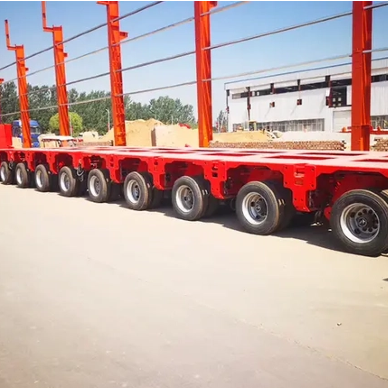
A tandem axle trailer may be suitable for some medium-to-heavy operations where maneuverability and moderate capacity are both important. A tri-axle setup may be more appropriate when higher weight distribution and better load support are needed. In specialized heavy haul applications, even more complex axle arrangements may be necessary.
The main point is that the axles should match the actual load profile and road rules. Too few axles may overload the system. Too many may add unnecessary cost, weight, and maintenance complexity if the application does not require them. Good axle selection is about balance.
Think About Deck Length and Deck Height
Deck dimensions affect much more than whether the cargo physically fits on the trailer. They also influence load placement, turning behavior, loading convenience, and route clearance.
A deck that is too short can create overhang issues or force poor weight distribution. A deck that is unnecessarily long may reduce maneuverability and add extra structural weight. We usually recommend choosing a deck length that supports the real cargo range rather than only the largest possible unit.
Deck height is equally important. A higher deck may be acceptable for some industrial loads, but for tall machines or route-restricted operations, lower deck height can make transport much easier. This is one reason low bed trailers remain so important in heavy equipment transport.
Evaluate the Road and Working Environment
A trailer that performs well on highway routes may not be the best choice for rough industrial yards, construction zones, or mining areas. That is why route conditions should be considered early in the selection process.
If the trailer will operate mainly on smooth, paved roads, ride stability and fuel efficiency may be more important priorities. If it will work in harsh environments with uneven terrain, mud, dust, or repeated impact, then stronger suspension, reinforced structure, and durable running gear become more important.
We always believe the trailer should be built for the real road, not the ideal road. Buyers who ignore working conditions often discover wear problems much sooner than expected.
Choose the Right Suspension System
Suspension affects both trailer durability and cargo protection. In heavy duty applications, it plays a major role in shock absorption, load stability, and road handling.
Mechanical suspension is often valued for simplicity and toughness. It can perform well in harsh environments where ruggedness is a priority. Air suspension may offer better ride quality and may be preferred when protecting sensitive cargo or improving road comfort is more important.
There is no single best suspension type for every application. The right choice depends on the load, the road, and the maintenance priorities of the fleet.
Do Not Overlook Braking Performance
One of the most common mistakes in trailer selection is giving too much attention to carrying capacity and too little attention to stopping control. As load weight rises, braking performance becomes increasingly critical.
A heavy duty trailer should have a braking system suited to its real working load, not just its empty structure. Good braking support helps improve control during deceleration, reduces risk on downhill routes, and contributes to overall road safety.
When evaluating a trailer, we recommend thinking beyond capacity figures and considering how the trailer will behave in real transport situations, especially during sudden stops or loaded descents.
Loading and Unloading Should Be Practical
The trailer should not only carry the load well. It should also fit the loading process. This is an area where operational efficiency is often won or lost.
If the cargo is loaded by crane, open deck access may be most important. If the cargo is self-propelled machinery, ramp design and deck angle matter much more. If unloading speed is essential, a tipper structure may be the right answer.
A trailer that is theoretically suitable but difficult to load every day can slow operations and increase handling risk. We suggest choosing a design that supports the full workflow, not just the transport stage.
Customization Can Improve Real Performance
Not every transport operation is standard, which is why customization often makes sense. Depending on the application, a trailer may need special deck dimensions, axle arrangements, ramp design, side structures, or reinforcement details.
Customization can help the trailer fit the load more naturally and reduce the compromises that come with generic designs. For operations with repeated cargo types or specialized site conditions, this can be a practical investment rather than an extra expense.
Conclusion
Choosing the right heavy duty trailer for your load means looking beyond basic capacity figures. The best choice depends on the full transport picture: cargo weight, dimensions, distribution, road conditions, loading method, axle setup, suspension, braking, and long-term maintenance needs.
A trailer that truly fits the job can improve safety, reduce downtime, and create better operating efficiency over the long run. That is why we always recommend starting with the real demands of the load and then selecting a trailer structure that supports those demands in daily work. If you are reviewing trailer options and want to better understand which configuration fits your transport needs, you can learn more from GDSS TRAILER and explore a solution that matches your application more effectively.
FAQ
Q: How do I choose the right heavy duty trailer for my load?
A: To choose the right heavy duty trailer, you should consider load weight, cargo dimensions, weight distribution, road conditions, loading method, axle configuration, and braking performance.
Q: What trailer type is best for heavy equipment transport?
A: A low bed trailer is often the best choice for heavy equipment transport because its lower deck height makes loading easier and helps reduce total transport height.
Q: Why is axle configuration important in heavy duty trailer selection?
A: Axle configuration is important because it affects load distribution, stability, tire wear, legal compliance, and overall trailer performance under heavy working conditions.
Q: What should I check besides heavy duty trailer price?
A: Besides price, you should check frame strength, material quality, suspension system, braking system, cargo securement features, maintenance support, and long-term durability.


