Operating uncertified vehicles for auto transport introduces severe operational risks. Fleet managers often face unexpected regulatory penalties, expensive cargo damage claims, and frustrating delays during cross-border logistics. These disruptions quickly erode your tight profit margins. For heavy-duty auto logistics, standardizing your fleet using an OTTC certified car carrier trailer ensures strict adherence to international safety guidelines. It guarantees your equipment meets rigorous structural regulations required for modern highway transit. A verified chassis fundamentally protects both your drivers and your high-value cargo. This comprehensive guide breaks down the core compliance frameworks and securement protocols. We will explore the precise procurement evaluation criteria you must review. You will learn how to confidently invest in reliable, fully certified multi-vehicle transport equipment for long-term fleet success.
Key Takeaways
Regulatory Baseline: OTTC certification guarantees the trailer meets stringent vehicle type approvals for chassis durability, braking systems, and payload distribution.
Risk Mitigation: Standardized cargo securement and hydraulic systems significantly reduce the likelihood of transit damage (e.g., fluid leaks from top loads, transit shifts).
Operational Efficiency: Properly certified multi-car carrier trailers optimize legal payload capacity without violating axle weight restrictions.
Buyer Evaluation: Selecting the right OTTC car hauler requires balancing structural longevity with maintenance accessibility.
The Business Case for OTTC Certification in Auto Logistics
Defining OTTC in Heavy Transport
OTTC stands for Approval of Vehicle Type. It serves as the ultimate benchmark for structural integrity in commercial hauling. Regulatory bodies test vehicle designs rigorously before granting this approval. Inspectors evaluate chassis strength under extreme torsional stress. They scrutinize brake responsiveness across varying load weights. They also verify lighting system compliance for night-time visibility. An OTTC badge proves the equipment meets global safety norms. It signals engineering excellence. Fleet operators rely on this baseline to ensure predictable performance. You cannot afford structural failures while hauling heavy automotive cargo.
Regulatory Compliance & Risk Avoidance
Deploying unverified equipment invites constant regulatory scrutiny. Highway patrol officers frequently target uncertified trailers for detailed inspections. These unexpected stops waste valuable transit hours. Conversely, operating a fully certified car transport minimizes weigh-station delays. Authorities recognize the OTTC documentation instantly. This recognition eliminates border crossing friction during international logistics runs. Your drivers breeze through compliance checks. More importantly, proper certification protects your company from crippling regulatory fines. You mitigate the risk of sudden vehicle impoundments. Steady, uninterrupted transit directly improves your bottom line.
Insurance and Liability Impact
Risk assessors look closely at your fleet's equipment standards. Insurance companies calculate cargo liability premiums based on potential failure rates. Utilizing uncertified trailers spikes your risk profile significantly. However, insurers offer favorable rates when you deploy certified equipment. This correlation becomes undeniable when you haul high-value luxury vehicles. Certified structural integrity drastically lowers the chances of catastrophic transit damage. Underwriters trust verified safety standards. Over time, these premium reductions compound into massive operational savings. Upgrading your fleet proactively safeguards your financial interests.
| | Chart: Certified vs. Uncertified Fleet Outcomes |
Operational Metric | OTTC Certified Equipment | Uncertified Equipment |
Weigh-Station Delays | Minimal; documentation pre-verified | High; frequent manual inspections |
Insurance Premiums | Optimized; qualifies for safety discounts | Elevated; classified as high-risk |
Structural Longevity | Predictable; fatigue-tested chassis | Uncertain; prone to early metal fatigue |
Core Safety and Securement Standards for Multi-Car Carrier Trailers
FMCSA/NHTSA-Aligned Securement Principles
Transporting multiple vehicles requires flawless cargo securement. Regulatory frameworks like those from the FMCSA mandate specific restraint protocols. You must prevent lateral and forward vehicle shifting during sudden braking. Adhering to these standards prevents deadly highway accidents.
Four-Point Tie-Downs: Operators must secure every transported vehicle at four independent points. This prevents twisting forces from dislodging the car.
Over-the-Tire Straps: Using thick woven straps directly over the tires prevents suspension compression damage. It secures the vehicle firmly to the deck.
Engineered Wheel Chocks: Sturdy chocks block the wheels physically. They act as the primary defense against forward rolling forces.
Compliant trailers integrate designated anchor points specifically designed for these configurations.
Hydraulic and Deck Safety Mechanisms
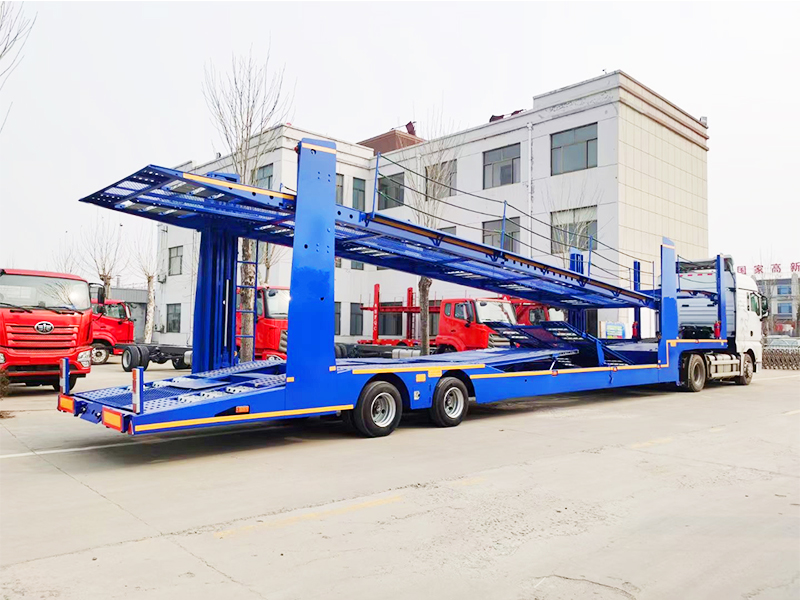
Multi-tier transport relies heavily on complex hydraulic lifting systems. These systems raise and lower heavy upper decks continuously. A hydraulic failure could cause a catastrophic deck collapse. Therefore, OTTC standards mandate strict mechanical fail-safes. Manufacturers install mechanical locking pins alongside standard hydraulic pressure valves. If a hydraulic hose bursts, the steel pins physically hold the deck aloft. Additionally, velocity fuses detect sudden fluid loss. They instantly shut the hydraulic circuit to freeze the deck in place. You must prioritize these redundancies to protect your drivers during the loading phase.
Top-Load Specific Risk Management
Loading vehicles on an upper deck introduces unique environmental hazards. Older top-loaded cars occasionally leak oil, coolant, or brake fluid. Gravity pulls these corrosive fluids downward onto bottom-tier vehicles. Luxury cars sitting below suffer severe paint degradation. Engineering standards address this top-load risk directly. Certified designs incorporate solid decking panels beneath engine bays. Drip pans catch escaping fluids effectively. Furthermore, solid upper decks prevent road debris from ricocheting upward and striking the undercarriages of elevated vehicles. These engineered barriers isolate each transported vehicle safely.
Capacity vs. Compliance: Structuring an Automotive Transport Semi Trailer
Maximizing Payload within Legal Limits
Fleet managers constantly seek to maximize carrying capacity. However, adding more cars increases compliance risks. You must evaluate the true carrying capacity against regional axle weight restrictions. A standard 6-car configuration distributes weight predictably. Upgrading to an 8-car configuration requires careful axle placement. You must calculate overall vehicle dimensions strictly. Extending the trailer length might violate maximum turning radius laws. Properly engineering an automotive transport semi trailer ensures maximum payload without drawing regulatory fines. Efficient layouts use drop-axle designs to lower the center of gravity while expanding deck space.
Weight Distribution Dynamics
Mixing different vehicle types complicates load balancing significantly. The automotive industry is rapidly transitioning toward electric vehicles (EVs). Standard sedans weigh relatively little compared to modern EVs. Large battery packs increase EV curb weights by up to thirty percent. Placing heavy EVs on the upper rear deck dangerously shifts the center of gravity. This imbalance causes severe trailer sway at highway speeds. Operators must load heavy units on the lowest, most central decks. Robust suspension systems counteract uneven load distribution. Air-ride suspensions adapt dynamically to changing deck weights, keeping the trailer perfectly leveled.
| | | EV vs. ICE Vehicle Load Planning Matrix |
Vehicle Type | Average Weight Range | Optimal Deck Placement | Suspension Impact |
Standard ICE Sedan | 3,000 - 4,000 lbs | Flexible (Upper or Lower) | Minimal; standard air pressure |
Heavy EV SUV | 5,000 - 7,000 lbs | Lower Deck, Center Axle | High; requires active air-ride adjustment |
Light Duty Truck | 4,500 - 6,000 lbs | Lower Deck, Rear Placement | Moderate; monitors rear axle capacity |
Open vs. Enclosed Certified Trailers
Selecting between open and enclosed designs requires a distinct decision framework. Open trailers utilize skeletal steel frames. This structure minimizes the trailer's unladen weight. It allows operators to maximize their payload capacity efficiently. Open trailers handle standard dealership transport perfectly. Enclosed trailers feature solid exterior walls. These add substantial dead weight to the chassis. You sacrifice overall carrying capacity for enhanced protection. Enclosed units shield high-end exotic cars from weather and road debris. Your target customer base dictates which structural tradeoff makes the most sense.
Evaluating OTTC Car Hauler Specifications: A Buyer's Checklist
The foundation of any reliable transporter is its underlying metallurgy. High-tensile steel construction is absolutely non-negotiable. Standard carbon steel flexes and bends under dynamic highway loads. High-tensile alloys resist this destructive metal fatigue. Over thousands of miles, the chassis endures constant vibration and twisting. Inferior metals develop micro-fractures eventually leading to catastrophic snapping. High-yield strength steel ensures the trailer frame maintains its rigid geometry. This structural longevity justifies the initial investment. Never compromise on the metallurgical grading when evaluating your next asset.
Braking and Axle Configurations
Stopping heavy rolling momentum requires advanced pneumatic engineering. Your OTTC car hauler must feature modern Anti-lock Braking Systems (ABS). Electronic Braking Systems (EBS) provide even faster response times. These systems prevent wheel lockup during emergency stops. Assess the specific axle weight ratings carefully. Dual-wheel tandem axles distribute heavy EV loads smoothly across the pavement. Drop-axle configurations lower the deck height safely. This lower profile provides necessary clearance for tall SUVs passing under low bridges. Verified axle configurations directly prevent dangerous blowouts.
Maintenance Realities
Routine maintenance keeps your fleet moving profitably. Complex designs often frustrate mechanics and increase labor hours. You need models featuring highly accessible hydraulic lines. Mechanics should reach critical valves without dismantling surrounding structural panels. Ensure the manufacturer utilizes universally standard replacement parts. Proprietary fittings leave your trailer stranded waiting for rare shipments. Request a verifiable warranty backing from the manufacturer. Strong warranties indicate the factory trusts their assembly process. Prioritizing maintenance accessibility drastically reduces unexpected downtime.
Implementation Risks and Fleet Integration Realities
Driver Training and Adoption
Buying certified equipment solves only half the puzzle. Human error remains a massive risk factor in auto logistics. New trailers feature intricate hydraulic controls. You must mandate comprehensive upskilling for your operators. They must learn the precise hydraulic sequencing required for safe loading. Pulling levers out of order jams the decks together violently. This mistake crushes vehicle roofs instantly. Drivers must master new load-balancing protocols. Proper training ensures they respect the center of gravity limits. Create simple, laminated checklists for the loading phase.
Conduct hands-on hydraulic sequencing workshops before deployment.
Test drivers on weight distribution math involving EV units.
Enforce a mandatory walk-around inspection policy after securing straps.
Lifecycle Maintenance Costs
Running high-cycle auto transporters incurs inevitable wear-and-tear. You must anticipate these ongoing upkeep expenses accurately. Hydraulic cylinders degrade as internal seals dry out and crack. Deck locking pins endure massive shear forces daily. Over time, metal pins develop grooves and lose their tight fit. Suspension airbags puncture from road debris eventually. Proactive fleet managers schedule preemptive parts replacements. Replacing a cheap hydraulic seal in the shop prevents an expensive roadside breakdown. Track component lifespans diligently to budget for these mechanical realities.
Vendor Due Diligence
The market contains suppliers offering fraudulent or expired certifications. You must verify a manufacturer’s documentation relentlessly. Ask for the official laboratory test reports. Cross-reference the provided certificate numbers through official regulatory databases. Ensure the documentation applies specifically to the exact multi-car carrier trailer you intend to purchase. A certificate for a flatbed means nothing for a multi-tier hydraulic unit. Demand transparent communication from your vendor's engineering team. True manufacturing partners welcome intense scrutiny.
Conclusion
Investing in fully certified multi-vehicle transport equipment transcends simple regulatory box-checking. It provides a highly strategic defense against devastating cargo claims and extensive operational downtime. By prioritizing verified chassis strength and standardized securement protocols, you protect your drivers and your clients' assets. Compliant trailers eliminate border crossing friction and reduce recurring insurance premiums.
To integrate this equipment successfully, follow these actionable next steps:
Audit your current and projected payload requirements, specifically factoring in heavier EV weights.
Cross-reference regional axle weight laws across your most frequent transport routes.
Request comprehensive, verifiable certification documentation from all shortlisted manufacturers.
Implement rigorous hands-on hydraulic training programs for your operating crew.
Establish a strict preventative maintenance schedule targeting high-wear deck pins and hydraulic seals.
FAQ
Q: What does OTTC certification specifically cover for car carrier trailers?
A: OTTC certification acts as a rigorous vehicle type approval. It specifically tests chassis strength against twisting forces. It verifies the pneumatic braking systems perform safely under maximum loads. Inspectors also ensure the lighting meets visibility laws. Finally, it validates that all load-bearing decks and securement points meet engineered safety thresholds.
Q: How does an OTTC car hauler differ from a standard flatbed transport?
A: A standard flatbed offers a single stationary loading surface. Conversely, an OTTC hauler features complex multi-tier decking. It utilizes specialized hydraulic lifting systems to stack vehicles vertically. It also incorporates engineered securement points specifically designed for over-the-tire straps, whereas flatbeds rely on generic chain tie-downs.
Q: Can a multi-car carrier trailer accommodate heavy Electric Vehicles (EVs) safely?
A: Yes, provided the operator calculates weight distribution correctly. EVs weigh significantly more than standard cars due to battery packs. The trailer must possess heavy-duty axle weight capacities. Operators must position EVs on the lower, central decks to prevent dangerous center-of-gravity shifts and avoid exceeding structural deck limits.
Q: How frequently should the hydraulic systems on an automotive transport semi trailer be inspected?
A: High-cycle auto transporters demand strict preventative maintenance. Operators should conduct basic visual checks of hydraulic lines and locking pins daily. A certified mechanic should perform a comprehensive pressure test and seal inspection every three to six months to prevent catastrophic deck collapses.


