Pipes stretching beyond standard deck length, steel bridge beams spanning dozens of meters, wind tower sections that simply refuse to fit on conventional equipment—when length becomes the constraint rather than weight, transport planning changes immediately. Overhang is no longer a minor detail; it becomes a structural and regulatory concern. That is precisely why the extendable flatbed trailer was developed. Designed to transport oversized loads that exceed normal deck length while maintaining full structural support, this adjustable trailer configuration solves long-load challenges without compromising stability. Understanding its evolution, engineering, safe operation, and maintenance is essential for anyone managing oversized cargo transport.
What “Extendable” Really Means in Practical Terms
The term “extendable” is often used loosely, but in heavy transport it refers to a precise structural capability.
Telescopic Deck Structure Explained Clearly
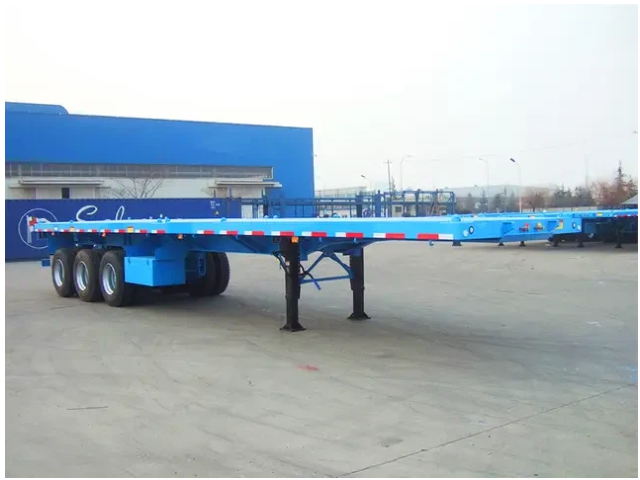
An extendable flatbed trailer features a telescoping frame design. The chassis is built in sliding sections that move outward to increase overall deck length. When retracted, the trailer functions like a conventional flatbed. When extended, the sliding beams lock into position, effectively lengthening the platform.
This telescoping mechanism is engineered with overlapping steel beams that maintain structural continuity during extension. The design ensures that load forces transfer evenly across the chassis, even at maximum length.
Unlike temporary solutions that rely on rear overhang, a stretch trailer physically supports the cargo along its full base.
Why It Reduces Risk Compared to Overhang
Transporting long cargo on a standard flatbed often results in rear overhang. Even when legally permissible, overhang shifts center of gravity, increases rear swing during turns, and places bending stress on the trailer frame.
An extendable flatbed trailer eliminates these risks by providing uniform deck support. The cargo rests entirely on engineered structural members rather than unsupported air space.
Reduced structural strain translates into improved road stability and reduced long-term fatigue on both trailer and load.
Engineering Developments That Strengthened Safety
Early stretch trailers were functional but limited in locking reliability and beam reinforcement. Modern engineering has dramatically improved safety performance.
High-Strength Main Beams
The backbone of any extendable flatbed trailer lies in its longitudinal beams. These beams must handle dynamic loads under braking, acceleration, and uneven road surfaces.
Modern manufacturing uses high-tensile steel and advanced welding techniques to reinforce these beams. Crossmembers are strategically placed to distribute load evenly across sliding sections.
Precision engineering ensures that extension does not compromise rigidity.
Locking Systems and Shear Force Resistance
Locking pins secure telescopic sections in place. These pins bear significant shear forces when transporting oversized loads.
Modern designs incorporate heavy-duty locking mechanisms with precise alignment tolerances. The locking holes are reinforced to prevent elongation over repeated use.
Proper locking prevents micro-movements that could gradually enlarge pin holes or create structural fatigue.
Pin integrity is a critical safety factor. Routine inspection ensures continued reliability.
When to Use an Extendable Flatbed and When Not To
Correct application prevents misuse and unnecessary cost.
Ideal Cargo Applications
Long steel girders
Wind turbine blades
Utility poles
Industrial piping
Precast concrete beams
Modular bridge components
These cargo types require extended deck length but often remain within standard height limits.
An extendable flatbed trailer provides stable support while avoiding unsafe overhang.
When Height, Not Length, Is the Real Issue
If cargo exceeds legal height limits, a step deck or double drop trailer is usually more appropriate.
An extendable trailer does not reduce deck height. It solves horizontal constraints only.
Understanding the true dimensional challenge—length versus height—ensures correct equipment selection.
Structural Load Distribution in Stretch Configuration
When fully extended, the trailer’s load distribution pattern changes.
The sliding sections transfer vertical load through overlapping beams. Axle positioning must be considered to maintain legal weight distribution.
Proper extension alignment ensures that load forces flow smoothly through reinforced structural members.
Advanced engineering reduces flexion at extension joints, maintaining consistent chassis behavior under dynamic conditions.
A Safe Operating Workflow for Stretch Trailers
Safe operation requires procedure and attention.
Extend Only Under Stable Conditions
The trailer should be extended on level ground. Inspect rails and locking areas for debris before sliding.
Check alignment visually during extension to prevent binding or uneven stress.
Proper setup reduces strain on sliding components.
Lock, Inspect, Then Load
After extending, confirm locking pins are fully engaged. Visual inspection ensures complete seating of pins within reinforced holes.
Loading should begin only after verification.
This sequence prevents misalignment under load.
Load Positioning for Stability
Even though deck length increases, load placement remains critical.
Center heavy cargo along structural beam lines. Avoid concentrating weight at extension joints.
Balanced placement ensures optimal axle distribution.
Route Planning for Oversized Loads
Oversized loads often require careful route selection. Consider turning radius, bridge clearance, and regulatory compliance.
Although the extendable flatbed trailer supports length structurally, operators must account for maneuverability during transport.
Advanced planning reduces operational risk.
Maintenance Considerations Unique to Extendable Flatbeds
Stretch mechanisms introduce additional inspection points.
Sliding Rails and Guide Surfaces
Sliding rails accumulate dust, rust, and debris. Regular cleaning prevents friction damage.
Lubrication reduces wear and ensures smooth extension.
Inspect rails for scoring or misalignment.
Locking Pins and Engagement Holes
Repeated extension cycles can gradually enlarge pin holes. Monitor for elongation, cracking, or deformation.
Replace worn locking components promptly.
Pin reliability directly affects structural integrity.
Beam Alignment and Structural Fatigue
Inspect overlapping beam sections for signs of flex-induced cracking.
Pay attention to weld seams near extension junctions.
Preventive reinforcement protects long-term durability.
Economic Advantages of Proper Stretch Configuration
Although initial investment may exceed that of a standard flatbed, operational benefits accumulate quickly when transporting repeated long cargo.
Supporting full cargo length reduces structural stress on both trailer and freight.
Minimizing overhang lowers permit complexity and escort requirements in many jurisdictions.
Improved stability reduces insurance risk and load damage claims.
For repeat projects involving oversized loads, the correct extendable flatbed trailer specification generates measurable long-term value.
Standard Flatbed vs Extendable Flatbed Decision Guide
Problem Type | Standard Flatbed Fit | Extendable Fit | Risk If Wrong | Typical Cargo | Recommended Action |
Excess Length | No | Yes | Rear overhang stress | Steel beams | Confirm extension capacity |
Height Concern | Limited | Limited | Permit issues | Tall machinery | Evaluate step deck |
High Weight | Yes | Yes | Axle overload | Industrial steel | Check axle rating |
Tight Loading Area | Yes | Yes | Instability | Modular units | Plan loading sequence |
This table helps identify correct equipment based on primary constraint.
Operational Scenarios That Benefit from Extendable Flatbeds
Infrastructure projects frequently require long structural components.
Wind energy installations demand blade transport spanning significant distances.
Bridge construction requires consistent long-beam support.
Industrial fabrication plants transport prefabricated modules across regions.
In each case, deck extension eliminates unsafe compromise.
Where GDSS Supports Oversized Transport Projects
Selecting the right configuration requires accurate cargo data.
Application-Based Engineering Approach
GDSS Trailer evaluates cargo dimensions, weight distribution, route constraints, and operational frequency before recommending specifications.
This practical approach ensures alignment between engineering and real-world application.
Manufacturing Capability
Founded in 2009, GDSS Trailer operates as a professional trailer designer and builder. The export office in Qingdao supports international coordination, while the Jining production plant is government-certified as a qualified global manufacturer of trailers.
With more than 200 employees, including skilled technical workers and advanced engineers, GDSS Trailer maintains high structural quality standards.
Long-Term Structural Reliability
Extendable flatbeds endure unique dynamic stress patterns.
Consistent inspection and preventive maintenance protect structural continuity.
Proper locking engagement, beam reinforcement, and axle configuration contribute to safe oversized transport over extended service life.
Modern stretch trailer design reflects decades of engineering improvement focused on safety and stability.
Conclusion
Length challenges demand engineered solutions rather than compromise. An extendable flatbed trailer provides structural support for oversized loads without relying on unsafe overhang. From telescopic beam reinforcement to secure locking systems, modern stretch configurations deliver stability, compliance, and operational efficiency. When specified correctly and maintained properly, the right telescopic flatbed trailer configuration reduces delays, improves safety, and ensures repeat transport success.
If your project involves extended cargo or recurring oversized shipments, contact GDSS Trailer today. Our engineering team will help determine the ideal configuration based on cargo length, loading method, and route requirements to ensure safe and efficient transport.
FAQ
1. What makes an extendable flatbed trailer different from a standard flatbed?
It features telescoping deck sections that increase usable deck length while maintaining full structural support.
2. Are extendable trailers suitable for tall cargo?
They solve length constraints. Height issues are better addressed by step deck or double drop trailers.
3. How often should locking pins be inspected?
Locking components should be checked before each extension and during routine maintenance cycles.
4. Do stretch trailers require special permits?
Permit requirements depend on cargo dimensions and regional regulations, not solely on trailer type.


