Low-bed trailers, also known as lowboy trailers, are an essential type of heavy-duty vehicle designed to transport oversized and heavy equipment that cannot be safely or legally transported using standard flatbed trailers. These specialized trailers are particularly valuable in industries such as construction, mining, oil and gas, and manufacturing, where large and heavy machinery, vehicles, and materials need to be moved efficiently. With a design focused on stability, safety, and load capacity, low-bed trailers offer a range of advantages that make them indispensable for transporting substantial loads.
In this article, we will discuss the various advantages of low-bed trailers and why they are so crucial for industries that require the safe and efficient transportation of oversized cargo. We will also explore how these trailers improve operational efficiency, reduce transportation costs, and ensure compliance with safety regulations.
1. Enhanced Safety
One of the primary advantages of low-bed trailers is their enhanced safety, particularly when transporting heavy, bulky, or tall items. The low deck height ensures that the load is closer to the ground, which contributes to greater stability during transport. This is especially crucial when moving large equipment, which can be top-heavy or prone to tipping over if not properly secured.
1.1. Lower Center of Gravity
The low-profile design lowers the center of gravity, which reduces the risk of tipping or swaying while driving. By keeping the load closer to the ground, low-bed trailers make it less likely for the load to become unstable during transport, even when navigating turns or rough terrain. This added stability makes them ideal for transporting equipment such as construction machinery, cranes, excavators, and heavy trucks.
1.2. Safer Loading and Unloading
Low-bed trailers are also safer for loading and unloading oversized equipment. The low deck height eliminates the need for ramps or cranes to load and unload, as the equipment can be driven directly onto the trailer from the ground. This reduces the risk of accidents during the loading process, which can occur with higher trailers that require cranes or forklifts for loading. Furthermore, the removable gooseneck feature on some low-bed trailers provides more flexibility and makes it easier to drive the equipment onto the trailer.
2. Increased Load Capacity
Low-bed trailers are specifically designed to carry heavier loads than standard flatbed trailers, making them a must-have for industries that require the transport of large, heavy machinery. Due to their design, low-bed trailers typically feature multiple axles, which help distribute the weight of the load evenly across the trailer. This distribution of weight allows them to handle heavier payloads without compromising safety or performance.
2.1. Higher Payload Capacity
A low-bed trailer can carry a much larger payload compared to standard trailers. Some low-bed trailers have a payload capacity of up to 100 tons or more, depending on the design and the number of axles. This makes them the ideal choice for transporting heavy machinery, industrial equipment, or oversized cargo that would be too heavy for traditional trailers.
2.2. Ability to Transport Large Equipment
Low-bed trailers are particularly suited for transporting large industrial equipment, such as excavators, bulldozers, cranes, dump trucks, and heavy transport vehicles. These items are often too large and heavy to be moved with conventional flatbed trailers, making low-bed trailers an essential part of the logistics chain in industries like construction, mining, and manufacturing.
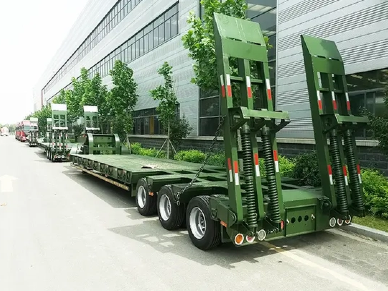
3. Versatility and Flexibility
Low-bed trailers are versatile and flexible, offering a wide range of benefits that make them suitable for various industries and types of loads. They can be configured to accommodate different load shapes and sizes, making them ideal for transporting various types of cargo.
3.1. Multiple Trailer Configurations
Low-bed trailers come in several configurations to meet the diverse needs of industries. Some common configurations include:
Fixed Gooseneck Low-bed Trailers: These trailers have a fixed gooseneck, meaning the front section of the trailer is permanently attached to the rest of the bed.
Removable Gooseneck Low-bed Trailers: These trailers feature a gooseneck that can be removed, which allows for easier loading of equipment and machinery.
Double Drop Low-bed Trailers: These trailers feature two lower sections, which allow for the transport of taller loads while still complying with height restrictions.
This variety of trailer types ensures that businesses can choose the trailer that best suits the load being transported and the specific needs of their operation.
3.2. Wide Range of Cargo
Low-bed trailers are capable of carrying a wide range of cargo, including:
Construction machinery: Bulldozers, excavators, backhoes, and cranes.
Heavy-duty vehicles: Dump trucks, graders, and road rollers.
Large industrial equipment: Generators, transformers, turbines, and industrial presses.
Long or oversized items: Such as large pipes, wind turbine blades, and factory components.
This versatility allows businesses to transport different types of equipment without needing to invest in multiple types of trailers.
4. Compliance with Legal Road Regulations
When transporting oversized loads, one of the key challenges is ensuring compliance with road regulations. Most countries have strict rules regarding the maximum height, weight, and width of loads that can be transported on public roads. Low-bed trailers are designed to help businesses meet these regulations while still safely transporting large and heavy equipment.
4.1. Height Compliance
The low profile design of low-bed trailers ensures that tall loads remain within the legal height limits. This is particularly important when transporting items such as wind turbine components, power transformers, or tall construction equipment, which would exceed height limits on standard trailers.
4.2. Weight Distribution
Low-bed trailers feature multiple axles and reinforced structures that help distribute the weight of heavy equipment across the trailer. This helps avoid overloading any single axle and ensures that the trailer remains within legal weight limits. Additionally, businesses may need to apply for special permits for extremely heavy loads, but using a low-bed trailer ensures that the load is within the weight distribution standards required by law.
5. Reduced Risk of Damage
The design of low-bed trailers helps reduce the risk of damage to the cargo during transport. With their low deck height, these trailers minimize the impact of road bumps, uneven terrain, and other hazards that could potentially cause harm to the equipment being transported.
5.1. Reduced Vibration and Impact
The lower height and sturdy suspension system of low-bed trailers help absorb shocks and vibrations during transport. This reduces the likelihood of damage to sensitive equipment or machinery, ensuring that cargo arrives at its destination in the same condition it was loaded.
5.2. Secure Loading and Unloading
Low-bed trailers typically come with multiple tie-down points that allow for secure fastening of the cargo. The low height and stability of the trailer make it easier to secure loads properly, reducing the risk of shifting or falling cargo during transport.
6. Cost-Effectiveness
Although low-bed trailers are generally more expensive than standard trailers, they can be a cost-effective solution in the long run, particularly for businesses that regularly need to transport heavy or oversized loads.
6.1. Reduced Need for Multiple Trailers
With their increased load capacity and versatility, low-bed trailers can handle multiple types of cargo, eliminating the need for businesses to purchase different trailers for different loads. This reduces capital investment and simplifies fleet management.
6.2. Reduced Fuel Consumption
Because low-bed trailers have a lower center of gravity and better weight distribution, they often require less fuel to operate than higher trailers that are more unstable and require more power to move. This can lead to long-term fuel savings, especially when transporting heavy loads over long distances.
7. Improved Operational Efficiency
Low-bed trailers play a key role in improving the efficiency of logistics operations. By reducing the time spent on loading, unloading, and securing cargo, businesses can achieve faster turnaround times and greater throughput.
7.1. Faster Loading and Unloading
The low profile of these trailers and the ability to load and unload directly from the ground make the process much faster and safer, improving overall efficiency. This is particularly beneficial for industries that need to keep projects on schedule, such as construction and mining.
7.2. Improved Route Planning
Due to their height compliance and ability to carry heavy loads, low-bed trailers enable businesses to plan transportation routes more efficiently, without the need for detours or special accommodations for oversized loads. This can reduce travel time and improve delivery schedules.
Conclusion
Low-bed trailers are a vital tool for industries that require the transport of large, heavy, or oversized equipment. Their low deck height, high load capacity, enhanced stability, and versatility make them an essential part of the logistics chain. Whether you're in construction, mining, manufacturing, or any other industry that deals with heavy machinery, a low-bed trailer can provide numerous advantages, from improved safety and compliance to better operational efficiency and cost savings.


