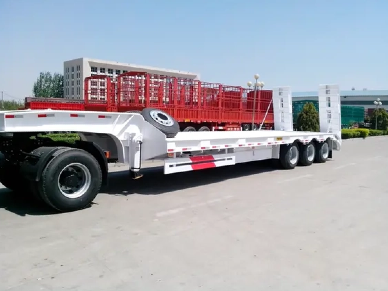
A lowbed trailer, also known as a lowboy trailer or low-loader trailer, is a specialized type of trailer designed to transport heavy, oversized, or abnormal loads. These trailers are primarily used in industries that require the transportation of large machinery, construction equipment, and other bulky items. What sets lowbed trailers apart from regular trailers is their design, which features a lower deck height, making it easier and safer to load and unload heavy goods. This unique design and the versatility of lowbed trailers make them a crucial piece of equipment for industries like construction, mining, manufacturing, and oil and gas.
In this article, we will explore what lowbed trailers are, how they work, their various types, and their uses. We will also discuss the advantages of using lowbed trailers and provide insight into the considerations you should keep in mind when choosing one for your business.
1. Understanding the Lowbed Trailer Design
1.1. Key Features of Lowbed Trailers
A lowbed trailer is a flatbed trailer with a design that places the cargo deck much lower than that of traditional trailers. This lower deck is particularly advantageous when transporting equipment that cannot be loaded onto standard flatbed trailers due to height restrictions.
Key features of a lowbed trailer include:
Lower Deck Height: The main distinguishing feature of a lowbed trailer is its low deck height. This is crucial for transporting tall and heavy equipment without exceeding height limits set by road regulations.
Removable Gooseneck (RGN): Many lowbed trailers come with a removable gooseneck. This is a feature that allows the front portion of the trailer to detach, enabling the transport of heavy loads without having to load them from above. The gooseneck can also be used to reduce the height of the load.
Multiple Axles: Lowbed trailers often have multiple axles to distribute the weight of heavy loads more evenly. The number of axles can vary, with some trailers featuring as many as 10 axles for extremely large loads.
Strong, Durable Construction: Given the heavy-duty nature of the loads they transport, lowbed trailers are built using high-strength steel or other materials capable of supporting large weights without bending or warping.
1.2. The Working Mechanism of Lowbed Trailers
The key to the functionality of a lowbed trailer lies in its low-profile design, which makes loading and unloading easier. Heavy machinery or large construction equipment can be driven directly onto the trailer, while its lower height ensures that the load remains within the allowable legal height limits. The removable gooseneck further enhances ease of loading, particularly when heavy equipment cannot be driven onto a trailer from a ramp. The detachable gooseneck allows the cargo to be driven directly onto the trailer bed without the need for additional equipment.
2. Types of Lowbed Trailers
Lowbed trailers come in various designs to meet specific needs, based on the type and size of the load being transported. Some of the most common types of lowbed trailers include:
2.1. Fixed Gooseneck Lowbed Trailer (FGN)
This is the most basic and traditional type of lowbed trailer. The fixed gooseneck is permanently attached to the trailer, which means the entire bed is not removable. This type of lowbed is commonly used for transporting equipment that can be loaded from the rear of the trailer via ramps.
Uses: Ideal for standard heavy-duty loads such as construction machinery, large pipes, and industrial equipment.
Advantages: The fixed gooseneck offers simplicity and fewer moving parts, making it reliable and durable.
2.2. Removable Gooseneck Lowbed Trailer (RGN)
A removable gooseneck is a design where the front portion of the trailer (the neck) can be removed or detached from the body of the trailer. This feature makes it easier to load extremely heavy equipment, such as excavators, cranes, and generators, as the gooseneck can be removed and the equipment can drive directly onto the lowbed.
Uses: Suitable for hauling larger machinery that needs to be driven onto the trailer, such as bulldozers, track loaders, and combines.
Advantages: Provides flexibility and better access to the deck for loading heavy equipment, especially for tall and bulky items.
2.3. Stretch Lowbed Trailers
A stretch lowbed trailer is designed to extend and accommodate longer loads. This type of lowbed can be extended in length to accommodate oversized machinery or multiple vehicles. Stretch lowbed trailers are equipped with telescoping or sliding components that allow the trailer to expand as needed.
Uses: Suitable for transporting long or irregularly shaped equipment, such as wind turbine components, long pipes, or large factory equipment.
Advantages: Flexibility in handling exceptionally long items while maintaining the low clearance required for transportation.
2.4. Double Drop Lowbed Trailers
The double drop lowbed trailer features two lowered sections, one near the front and another at the rear of the trailer. This design helps accommodate exceptionally tall loads. The lowered sections of the trailer provide additional space for taller equipment to fit within height limits.
Uses: Used for hauling large machinery, transformers, and construction equipment that exceed typical height restrictions.
Advantages: Provides an extra level of height clearance, allowing taller loads to be transported safely.
2.5. Extended Lowbed Trailers
Extended lowbed trailers are similar to stretch lowbeds but focus on accommodating extremely long cargo rather than just height. These trailers can handle loads that exceed normal length limits without requiring separate permits for extra-long loads.
Uses: Ideal for hauling oversized construction beams, large pipes, or industrial equipment.
Advantages: Increased capacity for transporting long items in a single trip, improving efficiency.
3. Common Uses of Lowbed Trailers
Lowbed trailers are mainly used for hauling heavy equipment, large machines, and other oversized loads that cannot be easily transported using standard trailers. The lowbed trailer's unique design allows for safer and more efficient transportation of such items.
3.1. Construction Industry
In the construction industry, lowbed trailers are frequently used to transport large machines such as bulldozers, cranes, excavators, and wheel loaders. These machines are often large, heavy, and have a significant height, making it impossible to transport them using traditional flatbed trucks. The low clearance and detachable gooseneck of a lowbed trailer make loading and unloading easier and safer for these heavy-duty vehicles.
3.2. Mining and Oil Industries
In the mining and oil industries, lowbed trailers are used to move equipment such as drilling rigs, mining trucks, and shovels. These pieces of equipment are usually too large and heavy to be transported on standard vehicles, so lowbed trailers are the preferred option.
3.3. Heavy Equipment Transport
Lowbed trailers are also commonly used for the transportation of industrial equipment, generators, and turbines. These items are often required for large manufacturing projects or power plant setups, and their bulk and weight make lowbed trailers the most efficient way to move them.
3.4. Agricultural Industry
The agricultural industry uses lowbed trailers for transporting large tractors, harvesters, and other farming equipment. Many agricultural machines are oversized and require specialized trailers for efficient transport.
4. Advantages of Lowbed Trailers
Lowbed trailers offer numerous benefits that make them essential for industries requiring the transportation of heavy and oversized loads.
4.1. Safety and Compliance
The low profile of a lowbed trailer ensures that the transported load stays within the legal height limits for road transport. This reduces the risk of traffic accidents and ensures compliance with road regulations.
4.2. Efficient Loading and Unloading
The low bed height and the optional removable gooseneck make it easier to load and unload equipment without the need for additional lifting equipment. This increases efficiency and reduces the time spent on the loading process.
4.3. Increased Payload Capacity
Lowbed trailers are designed to handle heavier loads, making them ideal for industries that require the transport of large, heavy machinery and equipment. The ability to carry more weight in fewer trips improves productivity and reduces transportation costs.
4.4. Versatility
With various types of lowbed trailers available, businesses can select a trailer that is most suited to their needs, whether it's a fixed gooseneck for simple loads, a removable gooseneck for flexible loading, or a double drop for taller items.
5. Choosing the Right Lowbed Trailer
When selecting a lowbed trailer, it's important to consider factors like payload capacity, loading and unloading requirements, terrain conditions, and the type of equipment being transported. Additionally, you should think about maintenance and durability to ensure that the trailer can withstand the rigors of heavy-duty use over time.
Conclusion
Lowbed trailers are indispensable for industries that require the transportation of large, heavy, or oversized equipment. Their design, which prioritizes lower deck heights and high strength, makes them ideal for moving machinery and materials that would otherwise be difficult to transport using conventional trailers. Whether you're in construction, mining, or another industry requiring heavy-duty transport, choosing the right lowbed trailer will ensure that your operations run smoothly and safely.


