Transporting highly volatile chemicals remains a high-stakes operation in modern logistics. You need absolute precision to keep the public and environment safe. Moving corrosive cargo introduces severe operational risks. Rapid equipment degradation occurs easily without proper engineering. This quickly leads to catastrophic containment failures. Fleet operators then face strict DOT non-compliance penalties. A reliable chemical transport operation requires exact alignment. You must match the cargo’s chemical properties directly against the tank's metallurgical composition. You must also adhere strictly to federal safety mandates. This guide unpacks the structural realities of modern commercial tankers. Fleet managers will gain a highly technical framework. You can use this insight to evaluate and source safe transportation assets.
Key Takeaways
Tanker selection must begin with a Safety Data Sheet (SDS) analysis to determine the exact DOT specification (e.g., DOT-407 vs. DOT-412) required for the hazardous cargo trailer.
Material choice is a calculated trade-off: 316L/317L stainless steel offers superior pitting resistance, while lined aluminum maximizes legal payload capacities.
Internal architecture—specifically the choice between surge-mitigating baffles and segregating bulkheads—determines the trailer’s versatility for multi-chemical transport.
Reliable corrosion resistant tankers rely on redundant fail-safes, including remote self-closing valves and precise pressure management systems to comply with 49 CFR 173.33.
Regulatory Alignment: Translating Cargo Profiles to Trailer Specifications
Start by evaluating the Safety Data Sheet (SDS). It serves as your primary engineering roadmap. Variables like pH limits dictate the baseline requirements. Fluids dropping below a pH of 2 or rising above 12.5 require aggressive protection. Flashpoints and vapor pressure further shape the build. They help manufacturers select the right chemical tank trailer specifications. We map these properties directly to specific safety regulations. Different chemicals mandate different structural codes.
DOT Specification Mapping
Federal regulations classify tank designs based on maximum lading pressures and fluid densities. You must select the precise DOT code for your specific cargo type.
Specification | Primary Application | Minimum Pressure Rating | Key Structural Features |
DOT-407 | Solvents, general chemicals, light flammables | 25 psig | Circular cross-section, unlined or lightly lined walls |
DOT-412 | Severe corrosives, heavy industrial acids | 5 psig | Heavy external reinforcing rings, specialized thick linings |
DOT-407 handles solvents and general chemicals. It requires a minimum 25 psig pressure rating. Engineers typically use a circular cross-section design here. It handles moderate internal pressure effectively. DOT-412 serves as the standard for severe corrosives. Heavy acids demand this specification. It carries a minimum 5 psig requirement. It also mandates highly specialized structural reinforcements. You will often see heavy external rings supporting the barrel.
Compliance Realities
Compliance realities force buyers to make careful choices. Over-specifying a trailer adds unnecessary tare weight. You lose valuable payload capacity as a result. This reduces your revenue per trip. Under-specifying creates massive operational risk. It invites catastrophic material failure. This leads directly to severe environmental damage and immediate regulatory grounding.
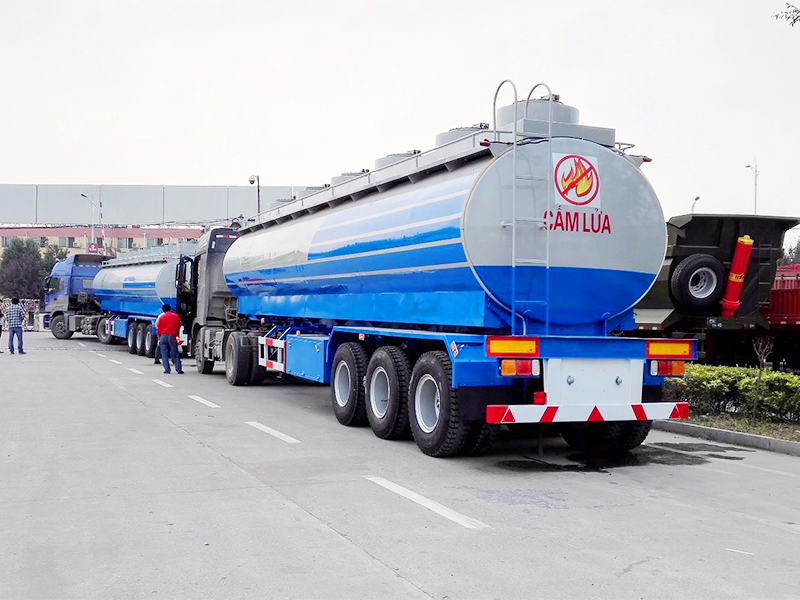
Material selection defines the operational lifespan of your unit. Let us analyze stainless steel first. Grades like 316L and 317L dominate the hazardous materials market. They contain precise blends of chromium, nickel, and molybdenum. These elements resist pitting and crevice corrosion. Harsh acids like nitric or sulfuric acid require this exact resistance. Stainless steel increases your overall tare weight. However, it delivers exceptional lifecycle longevity in extreme conditions.
Aluminum with Advanced Coatings
Aluminum offers a completely different strategic advantage. It maximizes legal payload capacities drastically. It greatly improves route fuel efficiency. But raw aluminum cannot handle harsh chemicals safely. It requires advanced barrier layers applied to the interior. Engineers spray epoxy linings for general chemical resistance. They use fluoropolymer or heavy rubber linings for extreme corrosive isolation. Hydrochloric acid transport heavily relies on rubber-lined aluminum shells.
Implementation Risk
This lining approach carries distinct implementation risks. Lined tanks demand stringent inspection routines constantly. A single microscopic pinhole in the lining spells disaster. Acid will rapidly compromise the aluminum shell underneath. You must test these protective linings regularly. Fleet managers should schedule rigorous spark testing. This ensures the barrier remains completely intact.
| | | Material Comparison Chart for Corrosive Transport |
Material Option | Primary Benefit | Key Vulnerability | Best Cargo Match |
316L/317L Stainless Steel | Extreme durability and pitting resistance | Higher tare weight, lower payload limit | Nitric acid, sulfuric acid, mixed chemicals |
Lined Aluminum | Maximized payload, superior fuel economy | Requires intensive lining inspections | Hydrochloric acid, specialized single-chemicals |
Internal Tank Trailer Design: Managing Fluid Dynamics and Purity
Internal architecture determines the operational versatility of your fleet. Proper tank trailer design heavily influences vehicle stability on the highway. You must manage volatile fluid dynamics carefully.
Surge Mitigation (Baffles)
Surge mitigation relies heavily on internal baffles. These perforated plates control the kinetic energy of the liquid. They slow the fluid down during sudden stops. This greatly reduces rollover risk for the driver. Baffles do not compartmentalize the fluid. Liquid still flows freely throughout the whole barrel. They simply break up the massive physical wave energy during transit.
Cargo Segregation (Bulkheads)
Cargo segregation requires different engineering entirely. Builders use solid, double-walled bulkheads for this specific task. They divide the barrel into fully sealed independent compartments. This allows a single hazardous cargo trailer to transport completely incompatible chemicals safely. Separate discharge manifolds prevent accidental mixing. This maximizes fleet utilization on complex multi-stop delivery routes.
The Smooth-Bore Alternative
Some logistics operations require the smooth-bore alternative. These specialized tanks feature zero internal baffles. The interior walls remain completely smooth from end to end. High-purity chemical transport demands this specific layout. It guarantees 100% cleanout after unloading. You completely eliminate cross-contamination risks for sensitive products. However, smooth-bore tanks require highly skilled driving. Unrestricted fluid creates significant surge forces on curves.
High-Pressure Fail-Safes and Safe Loading Architecture
Safe loading architecture relies on redundant mechanical fail-safes. Pressure and venting systems remain absolutely critical for daily operation. You must manage the Maximum Allowable Working Pressure (MAWP) continuously. Pressure relief valves and specialized air vents handle this task. They prevent the tank from rupturing during active loading or transit.
Emergency Containment
Emergency containment protects the public during severe accidents. The DOT mandates several strict safety features for all fleets. Rollover valves sit directly on top of the barrel. They physically lock the volatile fluid inside if an overturn occurs. You also need remote-controlled internal self-closing stop valves. Operators can shut these valves instantly from a safe distance.
Loading/Unloading Mechanisms
Loading and unloading mechanisms prioritize human safety above all else. Proper procedures prevent disastrous chemical exposure.
Pneumatic loading systems utilize controlled air pressure to move fluids.
They push or pull dangerous liquid safely without mechanical pumps.
This closed-loop system minimizes human exposure to toxic chemical vapors.
Static grounding and bonding systems remain mandatory at all times.
You must deploy them during all flammable chemical transfers.
They prevent dangerous static electrical sparks from igniting airborne vapors.
Evaluation Framework: Shortlisting Your Chemical Transport Solution
Sourcing the right commercial unit requires careful operational evaluation. Start by mapping your baseline capacity against local route restrictions. Most trailer capacities range from 5,000 to over 10,000 gallons. You must balance this internal volume against strict regional bridge laws. Keep your gross vehicle weight rating (GVWR) entirely legal.
Lifecycle Longevity and Payload Efficiency
Evaluate the long-term financial impact of premium alloy materials carefully. Do not just look at the initial purchase price. Weigh upfront alloy costs against extended operational savings. Premium materials drastically cut maintenance downtime across the decade. They deliver superior lifecycle longevity in harsh environments. They optimize payload efficiency over the long run. A well-built corrosion resistant tanker stays on the road producing reliable revenue.
Manufacturer Vetting
Manufacturer vetting prevents costly procurement mistakes. Look for specific technical capabilities when interviewing potential suppliers.
Verify their automated welding processes to ensure flawless seams.
Check their historical adherence to ASME and DOT manufacturing standards.
Ask detailed questions about custom plumbing and fabrication capabilities.
Plan your fleet updates around realistic lead times.
Specialized hazardous material units typically take 30 to 60 days to build. Do not rush the engineering process. A perfectly tailored chemical tanker trailer protects your drivers and your balance sheet.
Conclusion
Sourcing a chemical tank trailer remains a rigorous exercise in operational risk management. You must meticulously balance corrosive resistance against long-term payload economics. Success requires deep, uncompromising alignment with federal safety codes. A minor engineering oversight can trigger severe consequences.
Compile your specific SDS profiles immediately. Document your operational weight limits and route restrictions carefully. Use this concrete data to guide your engineering consultations. Engage reputable trailer manufacturers early in your procurement cycle. Their technical expertise will help you finalize a secure, highly profitable transport solution.
FAQ
Q: What is the difference between a DOT-407 and DOT-412 chemical tank trailer?
A: DOT-407 trailers transport general chemicals and solvents safely. They feature a minimum 25 psig pressure rating and typically utilize a circular cross-section. DOT-412 trailers haul severe corrosives and heavy industrial acids. They carry a minimum 5 psig rating. They also require extensive external structural reinforcements to handle incredibly heavy, dense liquids safely.
Q: Can aluminum be used for a hazardous cargo trailer?
A: Yes, you can use aluminum for hazardous materials. However, operators must treat the internal barrel with specialized barrier coatings. Applying epoxy, rubber, or fluoropolymer linings prevents harsh chemical reactions. These linings isolate the cargo. They protect the lightweight aluminum shell from rapid corrosion while actively maximizing your legal payload capacity.
Q: How does a multi-compartment tank trailer design work?
A: Multi-compartment designs use solid, double-walled bulkheads to divide the main barrel. These rigid bulkheads create fully sealed, independent sections. This setup allows one trailer to haul highly incompatible chemical agents simultaneously. Separate discharge manifolds and isolated plumbing systems ensure the volatile liquids never mix during loading, transit, or final unloading.
Q: What is the typical lifespan of a corrosion resistant tanker?
A: The lifespan depends heavily on the materials and the hauled cargo. High-grade stainless steel units often last 15 to 20 years with rigorous maintenance. Aluminum tanks equipped with protective linings also offer long service lives. However, they require periodic recoating and strict spark-testing routines to prevent microscopic pinhole leaks from destroying the shell.


