If your cargo is only slightly too tall, the wrong trailer choice can quickly turn into a permit problem. A few extra inches may mean route restrictions, escort vehicles, additional insurance costs, or delayed delivery schedules. That is exactly why understanding what a step deck trailer is—and how it differs from a flatbed trailer—matters before you finalize a transport plan. When height is close to the legal limit, choosing between a step deck trailer and a flatbed trailer becomes a practical engineering decision that directly affects compliance, operational cost, and safety.
Step Deck Explained in One Clear Picture
Many people hear the term step deck but do not clearly visualize how it works. The difference is structural, but the impact is operational.
Two Deck Levels—What the “Step” Really Means
A standard flatbed trailer has a single continuous platform from front to rear. A step deck trailer, sometimes called a drop deck, has two distinct deck heights. The front portion sits higher, positioned over the tractor’s rear wheels. The rear portion drops lower, creating the “step” that gives this trailer its name.
This structural drop allows cargo to sit closer to the ground without changing the tractor unit or the road clearance.
The design may appear simple, but that lowered section significantly expands the range of cargo that can be transported legally.
Why Lower Deck Height Buys You Extra Cargo Height
Most transport markets limit overall vehicle height to around 13.5–14 feet. A typical flatbed trailer deck often sits around 5 feet from the ground. That leaves limited vertical space for tall machinery or industrial units.
A step deck trailer typically lowers the rear deck by approximately 10–12 inches compared to a flatbed trailer. That difference may sound small, but in heavy transport, 10 inches can eliminate the need for oversize permits.
Avoiding permit requirements reduces paperwork, route approval delays, escort vehicle fees, and unexpected regulatory inspections.
This height advantage is the primary reason companies choose step deck trailers when transporting tall loads.
The Real Differences That Matter to Shippers
The difference between a step deck trailer and a flatbed trailer goes beyond deck height. It affects logistics, compliance planning, and loading procedures.
Deck Height and Legal Load Height
Legal compliance is often determined by combined height: deck height plus cargo height. A tall industrial press sitting on a flatbed may exceed limits, while the same press on a step deck trailer may fall safely within regulatory thresholds.
Transport managers must consider this calculation early in project planning. Height compliance is not flexible on most highways. Being even slightly over can result in forced rerouting.
Loading Method Differences
Flatbed trailers provide uniform deck height across the entire platform. Forklifts can approach from the side and distribute loads evenly.
Step deck trailers introduce a height transition. This requires careful load positioning, especially for wheeled equipment that must move between deck levels.
Crane loading is common for both types, but forklift access may vary depending on deck configuration.
Understanding loading infrastructure at both origin and destination is essential when choosing trailer type.
Weight Distribution and Securement Layout
Weight placement differs between flatbeds and step decks. On a flatbed trailer, weight can be positioned anywhere along a consistent deck surface.
On a step deck trailer, weight placed on the lower deck changes axle distribution differently than weight placed on the upper deck.
Securement planning must account for these differences. Lower deck positioning can reduce center of gravity, improving stability during turns and braking.
This structural advantage increases safety when hauling tall equipment.
When a Standard Flatbed Is Still the Better Option
A step deck trailer is not automatically superior. In many cases, a flatbed trailer remains the most practical solution.
Cargo That Is Not Height Limited
Steel beams, palletized building materials, pipe bundles, containerized freight, and many construction products do not approach height limits.
For these shipments, a flatbed trailer provides simplicity and faster operations.
Faster Loading and Unloading
Flatbeds offer unrestricted side access. Forklifts can move efficiently without navigating between deck levels.
In high-volume operations where time is critical, the uninterrupted surface of a flatbed reduces loading complexity.
Container Transport with Twist Locks
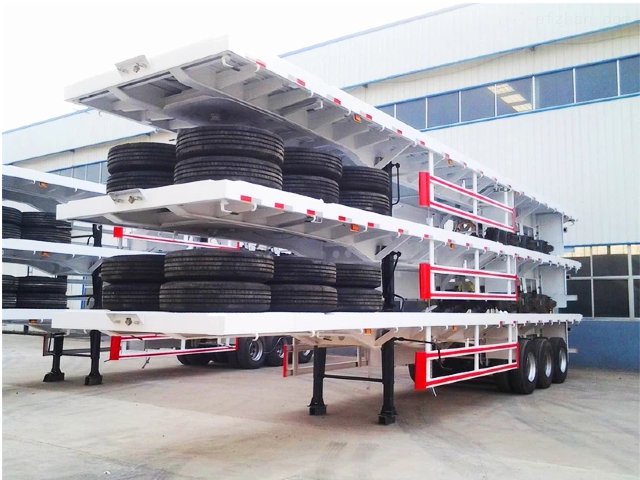
Flatbed trailers equipped with twist locks are specifically optimized for ISO container transport. The locking system secures containers directly to the deck without additional blocking.
GDSS Trailer manufactures reinforced container flatbeds such as the 4-axle 45ft model with integrated twist locks.
When a Step Deck Is the Clean Compliance Solution
Height-sensitive cargo changes the planning process.
Tall Machinery and Industrial Equipment
Manufacturing lines
Industrial compressors
Large generators
Agricultural harvesters
Prefabricated mechanical units
These cargo types frequently exceed flatbed height allowance.
Instead of requesting special permits, many operators switch to a step deck trailer to remain within legal transport height.
Quick Height Evaluation Method
Measure the cargo height.
Add estimated flatbed deck height.
Compare total to legal road limit.
If total height exceeds or nearly exceeds regulatory limits, a step deck trailer provides a safer alternative.
This rapid calculation prevents scheduling disruptions.
Step Deck vs Other Trailer Types People Confuse
Misunderstanding trailer types can result in incorrect equipment orders.
Double Drop vs Step Deck
Double drop trailers lower the deck even further than step decks. They are intended for extremely tall loads that exceed step deck capacity.
If cargo height is significantly over standard limits, double drop may be necessary. However, for moderate height adjustments, step deck is often sufficient.
Extendable Flatbed vs Step Deck
Extendable flatbeds solve length challenges, not height issues.
If your cargo is long but not tall, an extendable flatbed supports the full length without overhang.
If your cargo is tall but within standard length, a step deck trailer addresses the vertical constraint.
Recognizing whether the challenge is length or height ensures correct selection.
Flatbed vs Step Deck Comparison for Shippers
Feature | Flatbed Trailer | Step Deck Trailer |
Primary Advantage | Versatility | Height Compliance |
Typical Deck Height | Standard | Lower Rear Section |
Height Flexibility | Limited | Increased |
Best For | General freight, containers | Tall machinery |
Loading Access | Full side | Dual level |
Permit Reduction | No | Often yes |
This comparison clarifies operational differences at a glance.
How GDSS Supports the Right Trailer Decision
Correct trailer selection depends on precise cargo data.
Start with Cargo Dimensions
Length, width, height, weight, and loading method define the correct configuration.
GDSS Trailer engineers analyze these factors before recommending trailer types.
Manufacturing Capability
Established in 2009, GDSS Trailer operates as a professional trailer designer and builder. The export office of GDSS CONSTRUCTION is located in Qingdao, while the production plant in Jining is government-authorized and certified as a qualified world manufacturer of trailers.
With over 200 employees, including 78 skilled technical workers and 18 advanced engineers, the company maintains strict production quality standards.
This engineering foundation ensures structural reliability whether producing flatbed or specialized trailer configurations.
Practical Consultation Approach
Instead of focusing solely on model names, GDSS Trailer evaluates application requirements. Height constraints, axle distribution, securement needs, and operational environment all influence configuration.
Discussing cargo details early prevents specification mismatches.
Conclusion
Flatbed trailers provide access and versatility. Step deck trailers provide height solutions. When cargo approaches legal height limits, the lowered platform of a step deck trailer offers a compliant and efficient alternative without unnecessary permits. By analyzing deck height, loading method, and cargo dimensions, transport planners can determine whether a flatbed trailer or a step deck configuration is appropriate. Selecting the right drop deck trailer configuration ensures safe, efficient, and regulation-compliant transport.
If you are evaluating transport options for tall equipment or complex loads, contact GDSS Trailer today. Our engineering team will help determine the most suitable trailer configuration based on your exact cargo specifications.
FAQ
1. What is the difference between a step deck trailer and a flatbed trailer?
A step deck trailer has two deck heights, allowing taller cargo to remain within legal transport height limits. A flatbed trailer has a single-level deck.
2. When should I choose a step deck?
Choose a step deck when your cargo height approaches or exceeds legal road height limits using a standard flatbed trailer.
3. Can a flatbed transport tall machinery?
Only if total height remains within legal limits. Otherwise, a step deck trailer is recommended.
4. Is a step deck more expensive than a flatbed?
Cost depends on configuration and capacity, but step decks may reduce permit expenses for tall cargo, improving overall transport efficiency.


