A load plan can fail on the very first number. One wrong assumption about deck length or legal width can turn a smooth shipment into an expensive delay. That is why understanding flatbed trailer dimensions is not just a technical detail—it is the foundation of safe, legal, and profitable transport. Whether you are moving construction materials, steel structures, machinery, or containers, knowing the correct size and weight limits helps you avoid surprises and select the right configuration from the beginning.
The 5 Numbers That Decide Whether a Flatbed Works
Every successful shipment starts with five key measurements. If these numbers are wrong, everything that follows becomes complicated.
Deck Length vs. Overall Length
Many shippers confuse trailer overall length with usable deck length. Overall length includes structural extensions and coupling space, while deck length refers only to the flat loading surface where cargo actually sits.
For example, a 53-foot flatbed trailer may have a slightly different usable deck length depending on design details. If your cargo is exactly 53 feet long, you must verify the true usable deck space rather than rely on the model name.
At GDSS Trailer, deck length specifications are clearly defined to avoid this confusion. Our engineering team ensures customers receive precise loading dimensions before confirming an order.
Legal Width and Why 8.5 ft Keeps Coming Up
In most markets, the standard legal trailer width is 8.5 feet, or 102 inches. This number appears repeatedly in transport regulations because it represents the maximum width allowed without special permits in many regions.
If cargo exceeds this width, special routing or permits may be required. Even being slightly over 102 inches can create regulatory complications.
Standard GDSS flatbed trailers are built to comply with common legal width standards while maximizing usable deck area within that limit.
Deck Height and the Hidden Impact on Load Height
Deck height affects total cargo height. If a flatbed deck sits 5 feet above ground and your cargo is 9 feet tall, the total transport height becomes 14 feet. In many regions, 13.5 to 14 feet is the maximum allowed height.
This means deck height directly influences whether you need permits. Lower deck options or step deck designs may be necessary if cargo height is critical.
Understanding this relationship early prevents costly redesign of the shipping plan.
Standard Flatbed Size Ranges You’ll See Most Often
Although flatbeds can be customized, most shipments fall within common size ranges.
48 ft vs 53 ft—What Changes Operationally
The two most common lengths are 48 feet and 53 feet.
48-foot flatbeds are often preferred for maneuverability and easier routing in tighter spaces. They work well for medium-length construction materials and equipment.
53-foot flatbeds provide additional loading space, ideal for long structural components, steel beams, or multiple pallets arranged linearly. The extra five feet can significantly increase load efficiency.
GDSS Trailer manufactures both configurations, with reinforced cross-members and optimized weight distribution to maintain structural integrity even at full capacity.
Common Deck Widths and Why 102 Inches Matters
A deck width of 102 inches maximizes legal loading space without triggering overwidth permits. This measurement is not random; it is engineered to provide the largest legal footprint.
Some operators mistakenly believe small overwidth loads are manageable without issue, but regulatory checks often focus specifically on width compliance.
Flatbed trailers from GDSS Trailer are designed to optimize deck surface while staying within widely accepted legal standards.
Typical Deck Height Reference Points
Standard flatbed deck heights often range between 4.5 and 5 feet. Variations depend on suspension design, axle configuration, and structural reinforcement.
A slightly lower deck can increase allowable cargo height. A slightly higher deck may offer structural advantages or clearance flexibility.
Understanding these trade-offs helps determine whether a standard flatbed configuration is sufficient.
Weight Basics Without Turning This Into a Legal Textbook
Size is only half the equation. Weight determines safety and compliance.
Cargo Weight vs Trailer Rating vs Combined Limits
Cargo weight refers to the load itself. Trailer rating refers to the structural capacity of the trailer. Combined limits consider the tractor and trailer together.
Many problems occur when operators assume that if cargo weight is below trailer rating, everything is safe. That assumption ignores axle limits and distribution rules.
GDSS Trailer designs its flatbeds with balanced structural capacity to ensure axle loads are properly supported.
Typical Flatbed Payload Range
Flatbed payload capacity often ranges between 40,000 and 48,000 pounds depending on axle configuration.
A 4-axle flatbed semi-trailer, such as our 45ft container transport model with twist locks installed, can handle heavier loads while maintaining stability.
Axle count directly influences payload capacity. More axles generally distribute weight more evenly, improving compliance and road safety.
When “Under the Limit” Still Fails
Even if total cargo weight is within limits, improper distribution can overload a specific axle or the kingpin.
For example, placing heavy machinery too far forward may overload the tractor drive axles. Placing it too far back may overload trailer axles.
This is why engineering layout and deck reinforcement matter. GDSS Trailer provides clear guidance on load positioning to help customers avoid distribution errors.
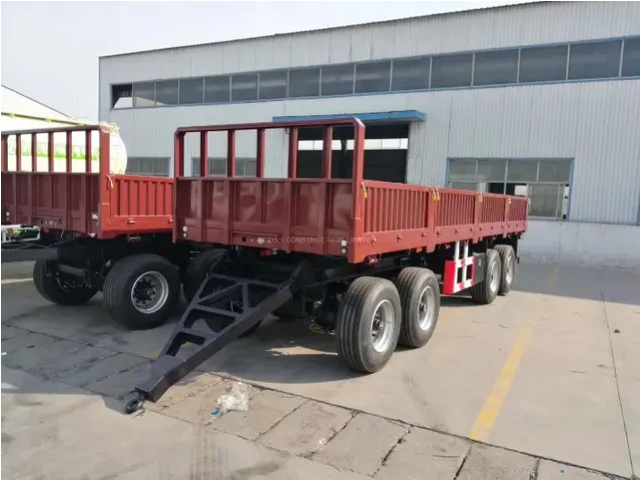
Size vs Real Usable Space
Flatbed trailers appear simple, but real usable space includes more than just deck measurements.
Overhang Rules and Why Extendable May Be Safer
If cargo length exceeds deck length, some regions allow limited overhang. However, overhang creates safety risks and visibility challenges.
For extremely long cargo, extendable flatbeds provide a safer alternative. Instead of forcing cargo onto a shorter deck, adjustable length ensures proper support.
Tie-Down Space, Rub Rails, Stake Pockets
Cargo securement systems require space. Rub rails, stake pockets, and lashing rings occupy edge areas.
When planning load width, remember that tie-down hardware reduces usable edge space. If cargo exactly matches deck width, securing it properly may become difficult.
GDSS Trailer incorporates strong, accessible lashing systems to simplify securement without sacrificing usable deck area.
Container Transport Needs Twist Locks
For container transport, twist locks are essential. A flat deck alone cannot safely secure a shipping container.
Our 4-axles 45ft container flatbed model includes integrated twist locks designed for standardized container transport, improving loading speed and safety.
Standard Flatbed Trailer Dimensions & Quick Load-Planning Chart
Below is a simplified reference chart for planning purposes. Specifications may vary by design and configuration.
Common Configuration | Typical Deck Length | Typical Width | Deck Height | Payload Range | Best-Fit Cargo | Red Flag Trigger |
48 ft Flatbed | 48 ft | 102 in | 4.5–5 ft | 40,000–45,000 lbs | Lumber, steel, machinery | Cargo exceeds height limit |
53 ft Flatbed | 53 ft | 102 in | 4.5–5 ft | 42,000–48,000 lbs | Long beams, pallet loads | Overhang required |
45 ft Container Flatbed | 45 ft | 102 in | 4.8–5 ft | Varies by axle | ISO containers | No twist locks installed |
This chart helps identify when a step deck, extendable flatbed, or special permit may be necessary.
Where GDSS Specs Help You Avoid Sizing Mistakes
Choosing the correct configuration is not about selecting the largest number. It is about matching design to real cargo.
Matching Axle Count to Real Cargo
More axles increase stability and payload distribution. A 4-axle configuration supports heavier container transport compared to standard tri-axle designs.
GDSS Trailer engineers evaluate customer cargo profiles before recommending axle setups.
Options That Improve Usability
Integrated container locks
Reinforced cross-members
Durable deck materials
Flexible lashing systems
These features are not just specifications—they directly reduce operational risk and maintenance downtime.
As the export office of GDSS CONSTRUCTION, located in Qingdao, GDSS Trailer has been a professional designer and builder of trailers since 2009. With over 200 employees, including 78 skilled technical workers and 18 advanced engineers, our plant in Jining is certified as a qualified world manufacturer of trailers. This experience ensures structural integrity, reliable performance, and consistent manufacturing standards.
Conclusion
Once you understand cargo length, width, height, weight, and loading method, selecting the right configuration becomes straightforward. Accurate planning around flatbed trailer dimensions and weight capacity eliminates guesswork and prevents costly compliance problems. GDSS Trailer offers engineered solutions designed to match real-world cargo demands, helping customers move forward with confidence using properly specified flatbed transport equipment.
For detailed specifications or project consultation, contact us today and let our engineering team assist you in selecting the ideal configuration for your shipment.
FAQ
1. What are the most common flatbed trailer dimensions?
The most common deck lengths are 48 ft and 53 ft, with a legal width of 102 inches. Deck height typically ranges between 4.5 and 5 feet.
2. How much weight can a flatbed trailer carry?
Flatbed trailer weight capacity usually ranges from 40,000 to 48,000 pounds depending on axle configuration and structural design.
3. When do I need a special permit?
If cargo exceeds legal width, height, or length limits, or requires significant overhang, special permits may be required.
4. Why are twist locks important for container flatbeds?
Twist locks secure ISO containers directly to the trailer deck, preventing shifting and ensuring safe container transport.


